
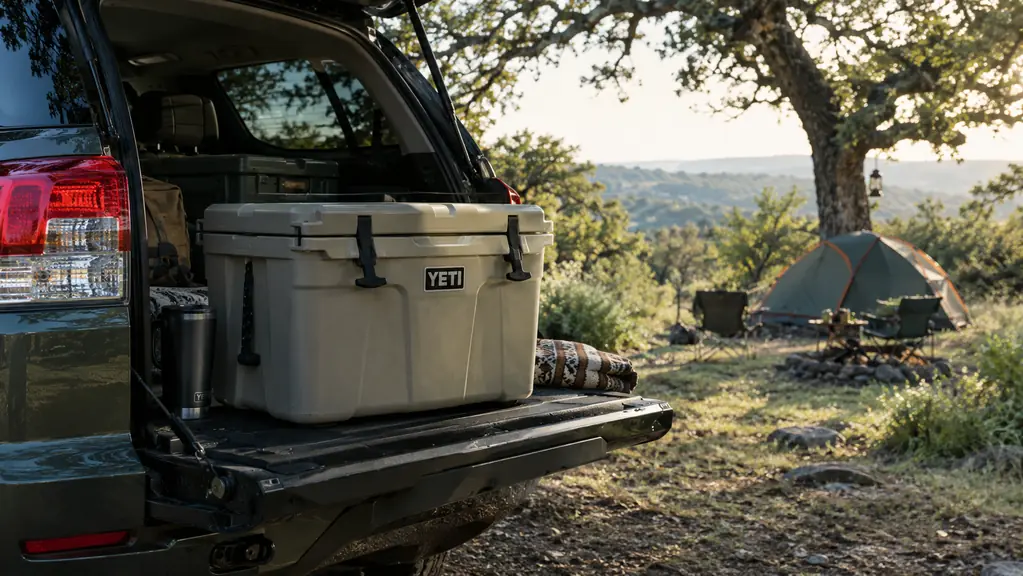
I bought the YETI Tundra 45 in spring 2025 after one too many Texas trips where the cheap plastic cooler was swimming in water by noon on day two. The soft-sided cooler we used years before had been worse: it kept things cold for exactly one afternoon and then turned into a wet bag we hauled home. Eighteen months and eleven campsites later, I have a clear picture of what this thing does well, where it falls short, and who should actually buy it.
For the record: I'm Tess, I camp out of a 2017 Toyota 4Runner with my husband Wade and our 14-year-old Eli, mostly at Garner, Pedernales Falls, and along the Guadalupe River. This is the long-term report, not a first-impression review. I've owned this cooler for a year and a half, which means I've had time to be annoyed by it, not just impressed by it.
The Quick Verdict
The Tundra 45 is the best ice retention I've tested in a car-camping cooler, but it's heavy, expensive, and honestly overkill for a weekend at a state park with shade.
Amazon Check Today's Price →Want ice past day three in Texas summer? This is the cooler that does it.
After a full season of Hill Country heat, the Tundra 45 is the one I pack first. Check today's price on Amazon before your next trip.
Amazon Check Today's Price on Amazon →How I've Used It
Since spring 2025, the YETI Tundra 45 has been on eleven trips: six weekends at Texas state parks, two long weekends on the Guadalupe, one week at Pedernales Falls in August, and a nine-day drive up to the Colorado mountains in September. It has lived in the back of the 4Runner the whole time, usually tied down on one side with a strap through the molded-in tie-down slots, with the tent and camp kitchen on the other side.
My test routine is the same every trip. The night before, I put a bag of ice in the cooler to pre-chill it, drain it in the morning, and pack it with drinks and food that are already cold from the fridge. I use block ice when I can find it at the gas station near the park entrance, and cubes when I can't. I open it as little as possible, and I keep it in the shade of the truck or the canopy. That's not a special ritual, it's just how you get the most out of any cooler. Pre-chilling does more than any other single thing, including buying a more expensive cooler.
The first trip was a weekend at Garner in late April 2025, and I was still skeptical enough to pack a backup bag of ice in a soft-sided cooler. I never opened the backup. On Sunday afternoon, two hours before we headed home, there was still ice in the Tundra. That was already two full days longer than the cheap plastic cooler had ever lasted, and it was only spring. By August, I stopped carrying a backup at all.
For a family of three, the 45 is about the right size. We pack roughly two-thirds drinks and one-third food: a gallon of milk, eggs, deli meat, cheese, a pack of hot dogs, and whatever we're cooking that weekend. It fills the cooler without jamming it, and there's still room for a bag of ice on top. A 65 would be more comfortable, but it would also take up even more of the cargo area, and the 45 already takes up plenty.
What the Rotomolded Shell Actually Does
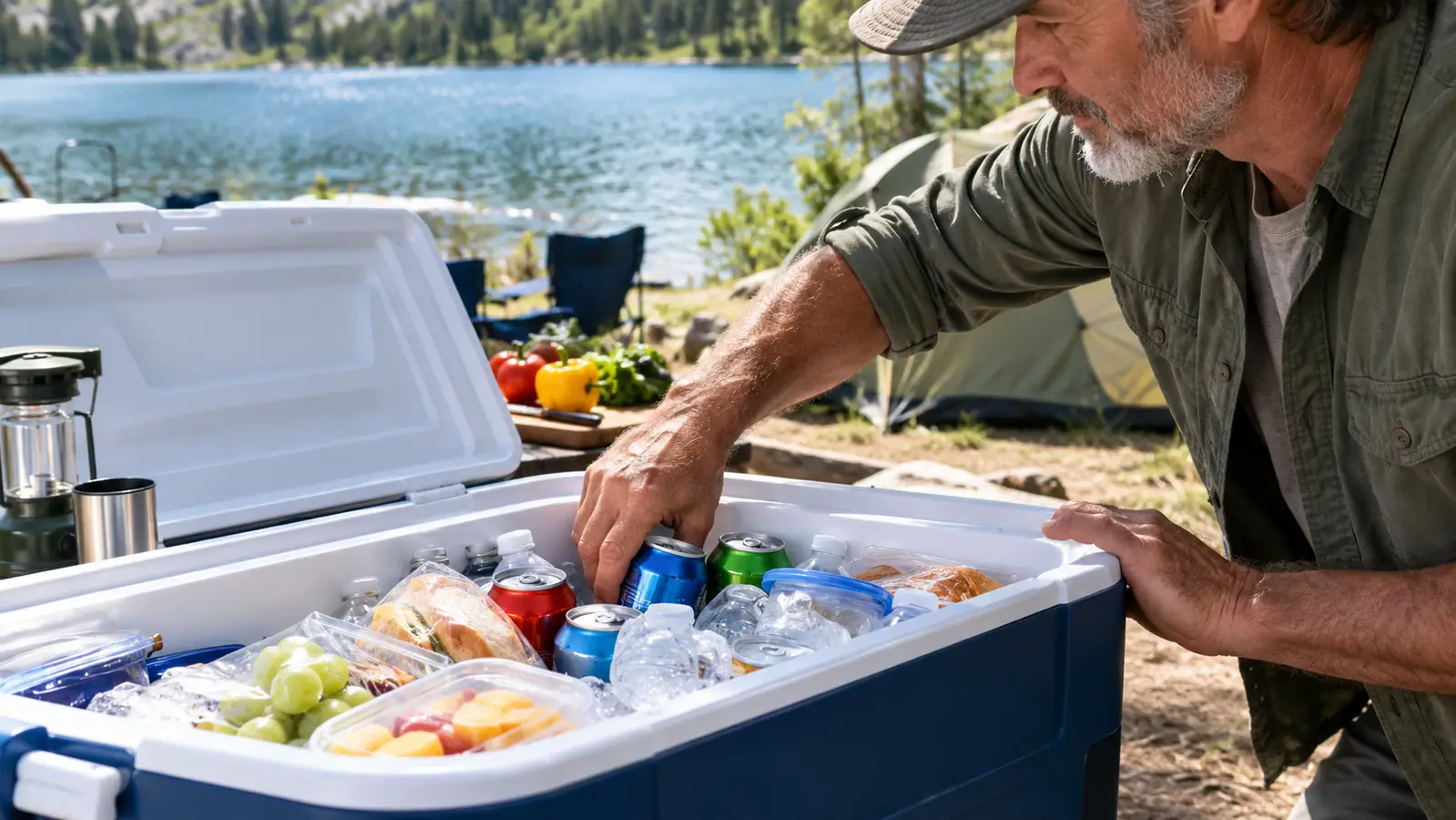
The Tundra 45 is rotomolded, which means the body is one continuous piece of plastic with no seams for air to leak through. The same construction trick is used by brands like Pelican and Orca, and it's the main reason a cooler like this keeps ice longer than a thin-walled ice chest. Heat gets into a cooler through the walls, the lid, and the gasket, in that order, and a thick single-piece shell slows all three down.
The walls are thick, the gasket is a real rubber seal rather than a flimsy lid lip, and the latches pull the lid down tight. When you close it, you can feel the air seal. That seal matters more than people think. A cooler with a weak gasket loses cold air every time you close the lid, and no amount of ice fixes that. I found this out by accident one weekend when I left one latch not fully snapped, and the ice loss was noticeably worse by Sunday. Snapping both latches became part of the routine after that.
YETI also puts the drain plug in a spot that actually drains. I've used coolers where you have to tilt the whole thing to get the water out. The Tundra drains flat, which sounds like a small thing until you're draining it at 11pm at a dark campsite. The plug threads out cleanly and goes back in without fighting, and the molded-in tie-down slots on the sides make it easy to strap the cooler down in the truck bed.
The interior is one smooth, open space with no shelves and no molded dividers. That's great for fitting a brisket or a watermelon, and less great for keeping things organized. We use mesh bags for produce and a plastic basket for condiments, and everything else gets packed in the order we'll eat it. It took me two trips to figure out that system, and it's the same system I'd recommend to anyone with this cooler.
Ice Retention Over a Season of Texas Heat
Here's the honest breakdown of what I saw across the season. On a typical spring weekend at Garner, with highs in the 80s, the Tundra kept ice for three full days. On a summer weekend with highs in the mid-90s, it held for about three and a half days. In August at Pedernales, with highs over 100, it made it to four days. In the Colorado mountains, where nights dropped into the 30s, ice lasted almost six days. Those are the numbers that matter to me, because they cover every kind of weather we camp in, from spring humidity to mountain cold.
The Pedernales week is the one I keep coming back to. We arrived on a Saturday morning and packed the cooler with about two-thirds drinks and one-third food, plus a ten-pound block of ice I bought at the gas station in Johnson City. By Wednesday evening, there was still ice in the bottom of the cooler. By Friday, the ice was gone but the water was still cold enough that nobody complained. We didn't buy ice once all week, and we left Saturday morning with maybe a quart of cold water in the bottom. I checked the ice every morning out of habit, and I kept waiting for it to fail. It never did.
The two long weekends on the Guadalupe were a different kind of test. The cooler sat in full sun on a gravel bar from noon until five, with the lid opening every time someone wanted a drink. That's the worst possible condition for any cooler, and the Tundra still had ice on the second morning. I was honestly surprised. I had expected the sun to eat through the ice the way it did with every cooler we'd owned before.
Those numbers assume the cooler is pre-chilled, packed with cold items, and kept in the shade. If you skip the pre-chill, you lose about half a day. If you leave it in full sun, you lose another half day. I know because I made both mistakes on the same June trip, and the difference was obvious by Sunday morning. The cooler is good, but it is not magic.
The other thing I noticed: the Tundra holds ice longer than it keeps food cold. By day four, the ice is still there but the interior is cool, not cold. That's fine for drinks, but I wouldn't push raw meat past day three in summer. I say that because some reviews make it sound like a week of refrigeration. It's not. On the Colorado trip, we still ate the ground beef by day three and used the cooler as a root cellar for the rest of the week.
Living With the Weight and the Size
The Tundra 45 weighs 33 pounds empty. Loaded with ice and food, it's closer to 60. I am 46 years old and I do not lift it into the truck bed. I slide it, or Wade lifts it, or we use the tailgate as a ledge. The tailgate trick works because the cooler is the right height to slide from the tailgate onto the picnic table without lifting. If you have back problems or you camp solo, this is a real consideration. We keep a rubber mat in the cargo area so the cooler slides instead of dragging, and we pack the cooler while it's still on the ground.
The size is also worth measuring before you buy. The 45 is roughly thirty inches long, sixteen inches wide, and sixteen inches tall, and it holds about thirty cans when you use the standard two-to-one ice-to-can ratio. It fits in the back of the 4Runner, but it takes up a serious chunk of floor space. With the Tundra on one side, we still fit the tent, chairs, and the camp kitchen, but there's no room left over. If you have a smaller SUV or a sedan, measure your cargo area first. If you're between sizes, go smaller, not bigger. A cooler you can't lift doesn't help anyone.
The good side of that weight is that the cooler doesn't move. It stays put in the truck, it stays put on the picnic table, and it works as a seat and a prep surface. Eli sits on it every trip. I've stood on it to reach something in the truck. That's not something you can do with a thin-walled cooler. At Pedernales, when a storm blew through one afternoon, we laid the Tundra on its side and used it to hold down the corner of the tarp. It did that job without complaint too.
This is the cooler that replaced two failures. The soft-sided cooler we used before it was easy to carry but useless by the second afternoon. The cheap plastic cooler that came after was worse: the lid never sealed, and ice was gone by day two no matter how we packed it. The Tundra is the opposite on every one of those points, which is why I stopped shopping for coolers after I bought it.
What I'd Change
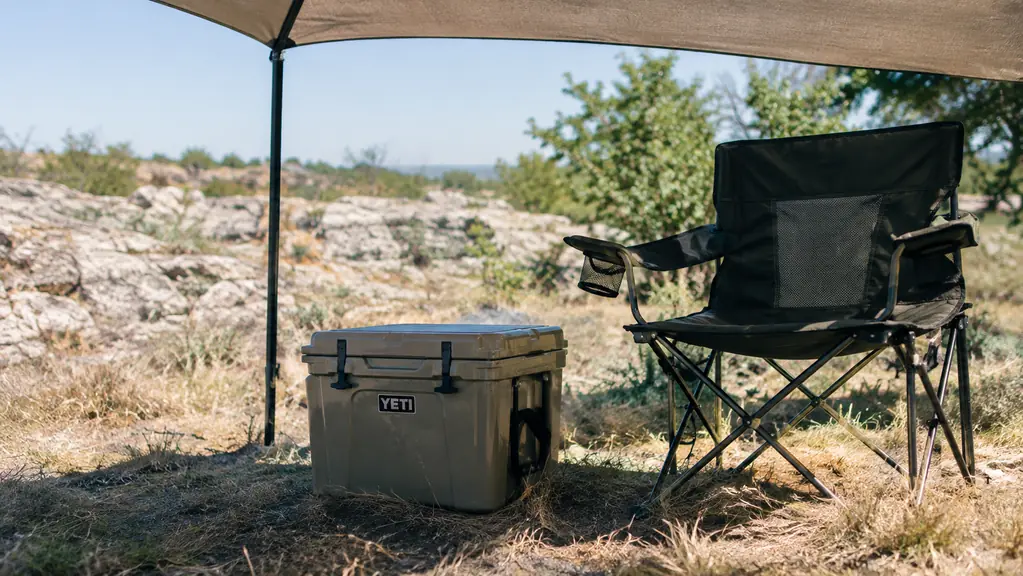
The price is the obvious one. The Tundra 45 costs more than most people want to spend on a cooler, and you are paying for the brand name on top of the build quality. If you only camp a couple of weekends a year in mild weather, a cheaper rotomolded cooler will do the same job. I don't regret buying this one, but I also don't pretend the price is easy to swallow. I thought about it for a month before I ordered it, and I'd still call it a splurge, not a necessity.
The second thing is the handles. They're molded into the body, which makes them strong, but they're not comfortable when the cooler is fully loaded. You feel every edge through the plastic. A cooler this heavy needs softer handles. We wrapped a towel through the handles on the one trip where we had to carry it a hundred yards from the truck to the site, and I wouldn't want to do that every weekend.
The third thing is the lack of a built-in divider. I pack drinks on one side and food on the other, and without a divider, everything shifts during the drive. The cans end up on top of the deli meat by the time we reach the park. It's a minor annoyance, but it's an annoyance you don't get with some cheaper coolers.
The last thing is cosmetic but worth knowing: the outside shows every scuff. The rotomolded shell shrugs off dents, but the surface picks up white scuff marks from the truck bed and the picnic table. It doesn't affect performance at all, and I stopped caring after the second trip. But if you want gear to stay looking new, this cooler will test you.
What I Liked
- Keeps ice for 3-4 days in Texas summer heat
- Rotomolded shell with a real rubber gasket
- Drains flat, no tilting needed
- Strong enough to sit and stand on
- Holds up to being tied down in a truck bed
Where It Falls Short
- Heavy, about 33 pounds empty and 60 loaded
- Expensive compared to other rotomolded coolers
- Molded handles get uncomfortable when full
- No divider, so contents shift in transit
- Overkill for mild-weather weekend trips
- Exterior shows scuffs after a few trips
We arrived Saturday and didn't buy ice once all week, in 100-degree August heat.
Who This Is For
The YETI Tundra 45 is for people who camp in real heat, who pack for more than two days, and who are tired of buying a new cheap cooler every season. It's for the family that wants to set up camp once and not think about ice again until it's time to leave. It's for anyone who has ever dumped warm water out of a cooler on day two and decided they were done with that. If that sounds like you, this cooler will probably be the last one you buy.
It's also for people who use their cooler as furniture. If you camp with kids, you know the cooler is going to be a seat, a table, and a step stool. The Tundra handles all of that without complaint. And it's for people who drive to camp, because this is a cooler that earns its keep in a truck bed, not on a hiking trail. The only time I wished for something smaller was when we hiked a quarter-mile to a beach site, and that was a carrying problem, not a cooling problem.
Who Should Skip It
Skip it if you camp once or twice a year in mild weather. A cheaper cooler will keep ice for a weekend, and you won't be hauling 33 pounds of plastic around for no reason. Skip it if you're a solo backpacker or a motorcycle camper, because the weight is brutal and there are lighter options that do the job.
Skip it if you need to carry it more than a few feet. This is a truck cooler, not a beach-walk cooler. If your campsite is a half-mile from the parking lot, you will regret this purchase. And skip it if you mostly camp in the shade in mild weather, because you're paying for ice performance you won't use.
Ready to stop buying a new cooler every season?
The Tundra 45 has earned its spot in the 4Runner for good. Check today's price on Amazon and see if it fits your camping style.
Amazon Check Today's Price on Amazon →