
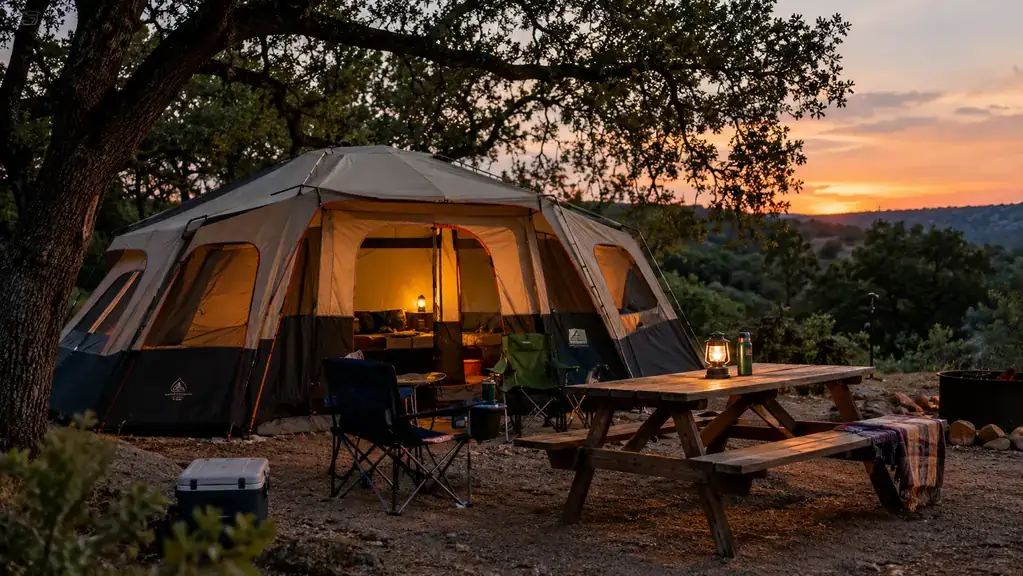
The summer before last, I stood in the dark at Garner State Park holding a wet pole section while Wade tried to fish the other end through a sleeve that had twisted itself into a knot. We were twenty-five minutes into pitching a dome tent from a big-box store, Eli had already given up and gone to sit by the fire, and the first drops of a storm were starting to hit the picnic table. That tent leaked at the seams around midnight. We packed it wet the next morning, and I started researching instant cabin tents before we even got home.
The tent I settled on was the CORE 9 Person Instant Cabin Tent, and two seasons later it is still the piece of gear I would replace first if anything happened to it. It has been through Texas summer heat, a Guadalupe River thunderstorm, a cold September night at Pedernales Falls, and a week in the Colorado mountains. This is the long-term review I was looking for before I bought it, the one that tells you how the thing actually holds up after the new wears off.
The Quick Verdict
Sets up in about two minutes, sleeps three people plus gear in real comfort, and has shrugged off a season and a half of Texas weather. The tradeoffs are a big packed size and a footprint that needs a roomy site.
Amazon Check Today's Price →The tent that ended our 25-minute setup arguments
If you camp a few weekends a season and you are tired of wrestling poles at dusk, this is the tent that fixed it for us. Two seasons in, the instant setup still works the way it did on day one.
Amazon Check Today's Price on Amazon →How I've Used It
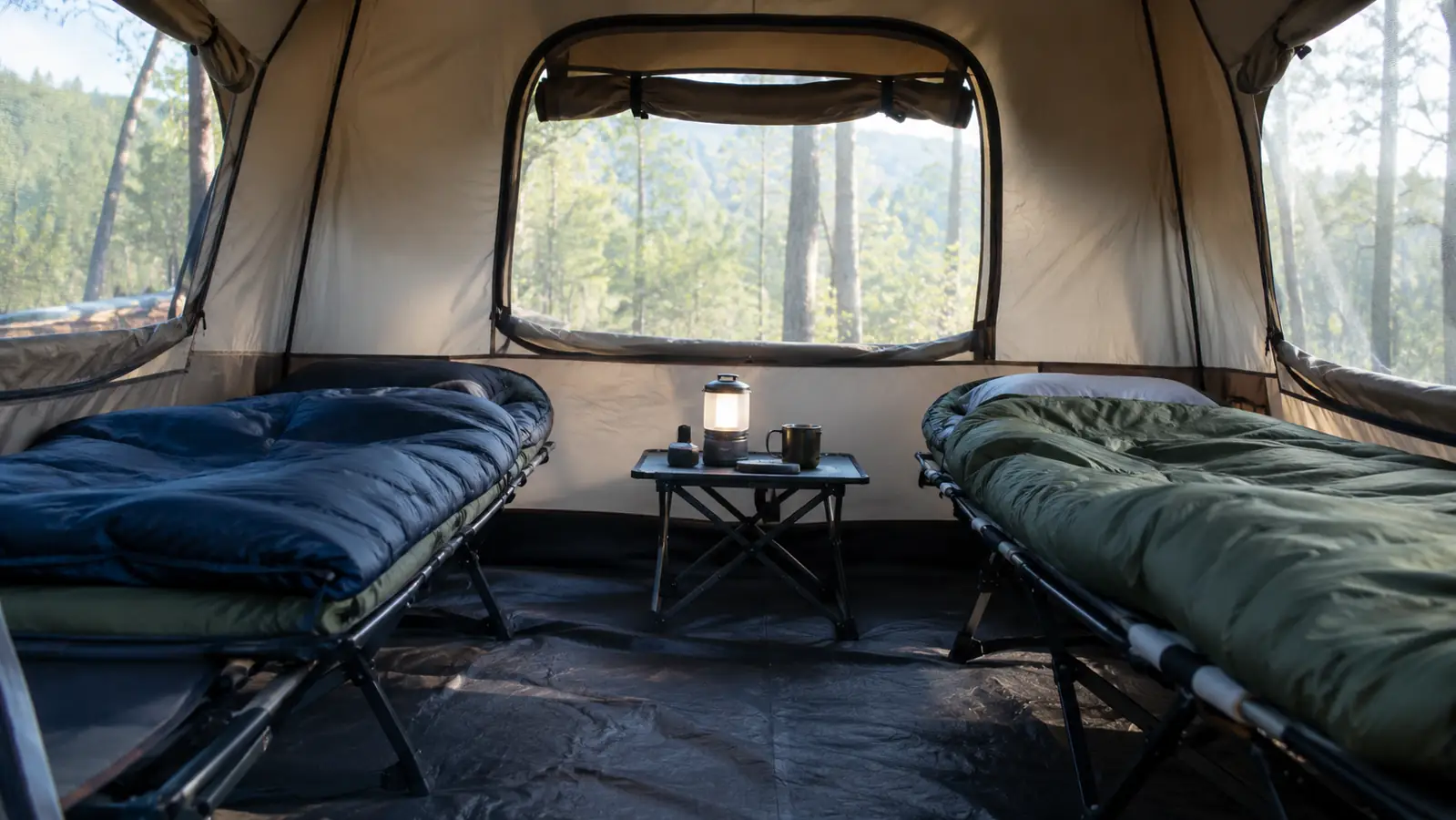
We bought the CORE in spring 2025, right after that Garner trip, and I picked the 9-person size on purpose. It sounds like overkill for a family of three, but we sleep on cots and we carry a lot of gear. Three cots, three duffels, a cooler, a camp table, and still room to stand up and change. That last part matters more than you think at 2 a.m.
Since then it has been to Garner again, Pedernales Falls, the Guadalupe River, and our yearly week in the Colorado mountains. That mix is the point. It has seen 95-degree afternoons with the sun hammering the fly, a storm that dumped two inches in an hour, and nights down in the low 40s. I wanted to know if the instant setup held up, if the seams held, and if the whole thing still went back in the bag without a fight.
My test routine is simple. I set it up and take it down on every trip, in whatever weather is happening, and I keep a running note of anything that rubs, strains, or leaks. After a season and a half, that list is short, and I will get to all of it below.
The first setup happened in the driveway, not at a campsite, and that is my advice to anyone who buys one. We opened the bag, unfolded the tent on the grass, and ran through the setup and takedown twice before it ever saw a state park. It took twenty minutes total, and it meant the first real trip was boring in the best way. Nothing to figure out, no surprises, just camp.
What the 2-Minute Setup Claim Actually Means
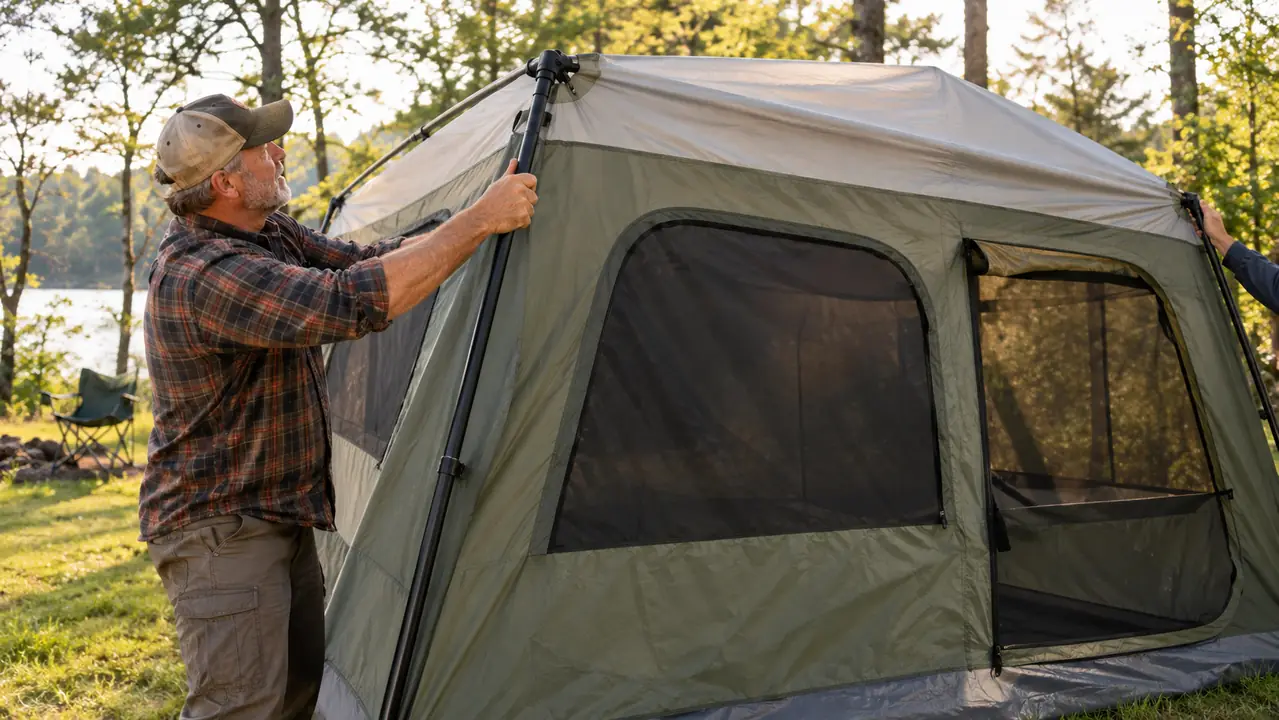
The poles on this tent are pre-attached and pre-bent into the frame, so there is no bag of loose poles and no threading fabric over a skeleton. You unfold the tent flat, then pull the two main sections upright, and the frame clicks into place on its own. The first time we did it, it took about ninety seconds with two people, and about three minutes solo. The "2 minute" in the name is close enough that I stopped timing it.
Here is what the product photos do not show you. You still have to stake it down, and you should do that before you load it with gear. The tent comes with stakes, and the corners have webbing loops that take them. On a calm night you could skip it, but Texas wind does not care about your plans, so we stake all eight corners and the two extra loops on the vestibule side. That adds two minutes, and it is the difference between a tent that stays put and one that flattens at 3 a.m.
One thing I learned the hard way: pull the frame gently and evenly. If you yank one side while the other is still folded, the shock-corded sections can twist, and then you get to untangle them, which is the one genuinely annoying job this tent can give you. Go slow on the first pull and it is fine.
One more setup note: this tent has a big footprint, and it wants a level spot. We have learned to look for a site that is flat and clear, and to lay the tent out so the door faces the picnic table. It is a small thing, but it makes mornings easier, and with a tent this size you cannot just spin it around later.
How It Handles Texas Heat and Sudden Storms
The tent has big mesh windows and a rain fly that covers the top and part of the sides. In summer we leave the fly off entirely and sleep with the windows open, and the airflow is good enough that we have used it comfortably into mid-June, which is about all you can ask of any tent in the Hill Country. The mesh keeps the bugs out and the breeze moving.
The rain test came at the Guadalupe River in May. A line of storms moved through around dinnertime and dumped hard for about an hour. We had the fly on and everything staked down, and the interior stayed dry, including the corners, which is where the old dome tent always failed. I checked the seams the next morning and they looked the same as the day we bought it.
Wind is the one thing I would not push this tent into. It is a tall, boxy cabin, and that catches air. We had one gusty night at Pedernales Falls where the walls slapped and the frame flexed, and I went out and added extra stakes and lowered the fly. It held, but if you camp in wide-open, exposed places, this is not the tent I would pick for a windstorm.
The cool-weather test came in Colorado in September, when nights dropped into the low 40s. The tent handled it fine, and the big windows mean you can close the mesh and keep some warmth in. The one thing to watch is condensation on cool, still nights, so we leave one window cracked and it has not been a problem.
Why I Bought the 9-Person Size for Three People
Let me talk you through the math, because it is the question I get every time someone sees the tent. The 9-person rating assumes you are packing people in like sardines on sleeping pads. We are not doing that. We use three cots, and a 6-person tent with three cots leaves no floor space at all. The 9-person gives us cots, a gear aisle, a spot for the duffels, and room to stand up fully, which is huge when you are getting dressed in the morning.
The center height is the part I would not trade. In our old dome tent, the only place you could stand was dead center. Here, most of the footprint has headroom, and Eli, who is 14 and already taller than me, can stand up and walk around in the middle. For a family that car camps, that is the difference between a tent you sleep in and a tent you actually live in.
There is also a room divider that clips across the middle, and we use it more than I expected. It gives Wade and me a little privacy from Eli without anyone having to leave the tent, and it takes about ten seconds to clip or unclip. It is a small feature, but it is the kind of thing that makes a tent feel like a cabin instead of a shelter.
The 9-person size sounds like overkill for a family of three until you try to fit three cots and a week of gear in a 6-person tent. Then it makes all the sense in the world.
The Tradeoffs Nobody Mentions in the Product Photos
First, the packed size. The bag is long and heavy, and it takes up a real chunk of the back of the 4Runner. We put it on the roof rack or lay it flat on top of the cooler, and it is the last thing we pack and the first thing we grab. If you camp out of a sedan with a full trunk, you will feel it.
Second, it is not a one-person tent. You can set it up solo, I have done it, but it is easier with a second person holding one corner while you pull the other. That is not a criticism, it is just the nature of a tent this size, and it is worth knowing before you buy it for solo trips.
Third, the included stakes are fine for soft ground, but they bend in rocky Hill Country soil. We replaced ours with heavier stakes after the first trip, and I would do that again. It is a small upgrade, and it makes the tent feel much more solid in wind. Fourth, the carry bag is snug. Getting the tent back in takes a minute and some patience, and you have to fold it the same way every time. Not a dealbreaker, but the photos make it look easier than it is.
The doors are another thing to know about. There is a main door on one side and a smaller one on the other, and both have awnings that can be propped with the included poles. We usually prop the main awning when it is not storming, and it gives us a dry spot for boots and the camp stove. It is not a true vestibule, but it is close enough for car camping.
How It's Held Up After a Season and a Half
After maybe a dozen trips, the frame still clicks together cleanly, the zippers still run smooth, and the fabric shows no real wear. The floor has held up to cots and boots and the occasional dropped lantern. I have not had a single seam leak, which is the thing I was most worried about after the old tent.
The only cosmetic issue is a little fading on the fly from sitting in Texas sun, and the webbing loops show some wear where the stakes rub. Neither affects function. I also check the shock cords on the pole sections every few trips, and they are still tight.
The honest summary is that the CORE has done everything I asked of it and nothing has broken. For a piece of gear that lives in the back of a vehicle half the year and gets thrown up and down every few weekends, that is the review that matters.
For maintenance, I do two things. I sweep the floor out before we pack it, because grit is what wears out tent floors, and I make sure everything is dry before it goes back in the bag. That is it. The tent has not needed any repairs, and I have not had to re-glue or patch anything.
What I Liked
- Sets up in about two minutes with two people, and about three minutes solo
- Interior is tall enough to stand up in most of the footprint
- Big mesh windows and a removable fly make summer use bearable
- Has stayed dry through real Texas storms, seams included
- Room for three cots plus gear without feeling crowded
Where It Falls Short
- Packed size is long and heavy, and it dominates the cargo area
- Not built for exposed, windy sites, it catches air
- Included stakes bend in rocky ground, plan to upgrade them
- Carry bag is snug, and repacking takes patience
Who This Is For
This tent is for the family that car camps a few weekends a season and wants the setup done before the fire is going. It is for people who sleep on cots, bring too much gear, and would rather spend the evening at the picnic table than wrestling with poles. If that is you, the instant setup stops being a gimmick and becomes the whole point.
It is also for the person who camps in places with trees and some shelter, which describes most Texas state parks and most of the Colorado sites we use. In those conditions, the CORE is comfortable, dry, and easy.
If you are the parent doing most of the setup, this tent is for you specifically. The whole design is aimed at making the worst part of camping faster, and after a season and a half, that is still what I appreciate most. I am not a gear person who gets excited about new ultralight fabrics. I am the person who wants the tent up so we can eat dinner.
Who Should Skip It
If you are a backpacker, or even a serious solo camper who wants a small, light shelter, this is not your tent. It weighs too much, packs too big, and needs two people to be truly easy. You will be happier with something half the size and a quarter of the weight.
If you camp in wide-open, exposed spots where wind is the main weather, I would look at a lower-profile dome instead. The CORE is a tall cabin, and it will always be a tall cabin. And if you only camp once a year, honestly, you can get by with whatever you already have. This tent earns its space in the truck because we use it constantly.
Also, if you expect a tent to survive a severe thunderstorm with hail or a real wind event, no cabin tent is the right answer, including this one. We pick our sites with that in mind, and the CORE has been dry and stable in every storm we have actually camped in. Know what you are buying and it will not let you down.
Two seasons in, this is the tent we reach for every single trip
If you are tired of the 25-minute setup and the wet seams, this is the tent that fixed both for us. It has held up through a season and a half of Texas weather, and it still sets up in about two minutes.
Amazon Check Today's Price on Amazon →