
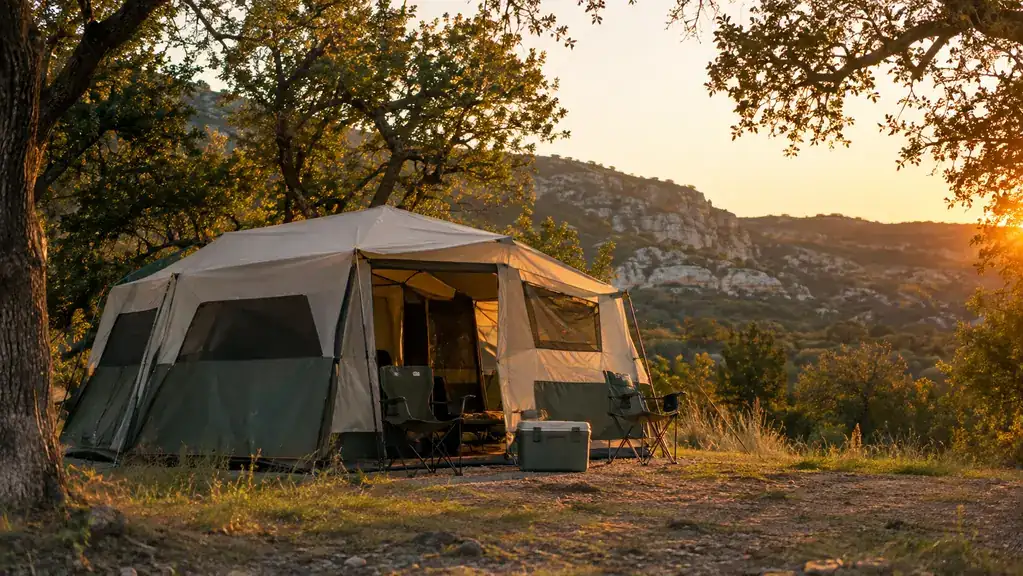
My husband Wade and I have car camped out of the same 2017 4Runner for years, and for two full seasons now our family tent has been the CORE 9 Person Instant Cabin Tent. We bought it in spring 2025, mostly because the dome tent we had before took the two of us 25 minutes to pitch and then leaked at the seams during a storm at Garner State Park. So when a friend offered to let us borrow her Coleman Skydome for a weekend at Pedernales Falls, I said yes for a simple reason: I wanted to know whether the cheaper tent would have been the smarter buy all along.
The short answer, after one very hot weekend and a lot of comparing notes: the Coleman Skydome is a genuinely good tent for the money, and it does a few things better than the CORE. But for how our family camps, with three people, cots, gear, and Texas weather, the CORE Instant Cabin Tent is still the one I would buy again. Here is the full breakdown, including the places where Coleman wins.
The short version: The CORE Instant Cabin Tent sets up faster, stands taller, and handles a sudden storm better than the Coleman Skydome, and after two seasons it still looks and acts new.
Want the tent that sets up in two minutes and has already survived two Texas summers?
The CORE 9 Person Instant Cabin Tent is the one I keep coming back to. Check today's price on Amazon and see if it fits your campsite.
Amazon Check Today's Price on Amazon →How I Tested These Two Tents
The CORE has been our main family tent since spring 2025. That means two Texas summers, two seasons of sudden Hill Country storms, a handful of trips to Garner and Pedernales Falls, and one week in the Colorado mountains where the nights dropped into the 40s. I know exactly how it pitches, how it sheds water, how it smells after being packed up wet, and how it handles a 14-year-old who likes to unzip the door at 6 a.m.
The Coleman Skydome I borrowed for one weekend at Pedernales Falls in late summer. I pitched it myself, slept in it for two nights with Eli, and paid attention to the things that usually annoy me about a tent: setup time, headroom, zippers, and whether the rainfly actually covers the doors. One weekend is not a long-term review, so I will be clear about which of my opinions come from a single trip.
A few specifics on the CORE side, so you know what two seasons of use actually look like. It has been pitched at least eleven times since spring 2025, including one trip where we set up in the dark after a late start, and it has been packed up wet twice, once at Pedernales Falls and once after a morning shower at Garner. I have replaced nothing on it, and the poles still click into place the same way they did on the first pitch. The zippers on both doors have stayed smooth, which is the thing I check first on any tent that has been through a few seasons. That matters to me because I have owned tents where the second season is when the small failures start showing up.
The Big Differences at a Glance
| CORE Instant Cabin | Coleman Skydome | |
|---|---|---|
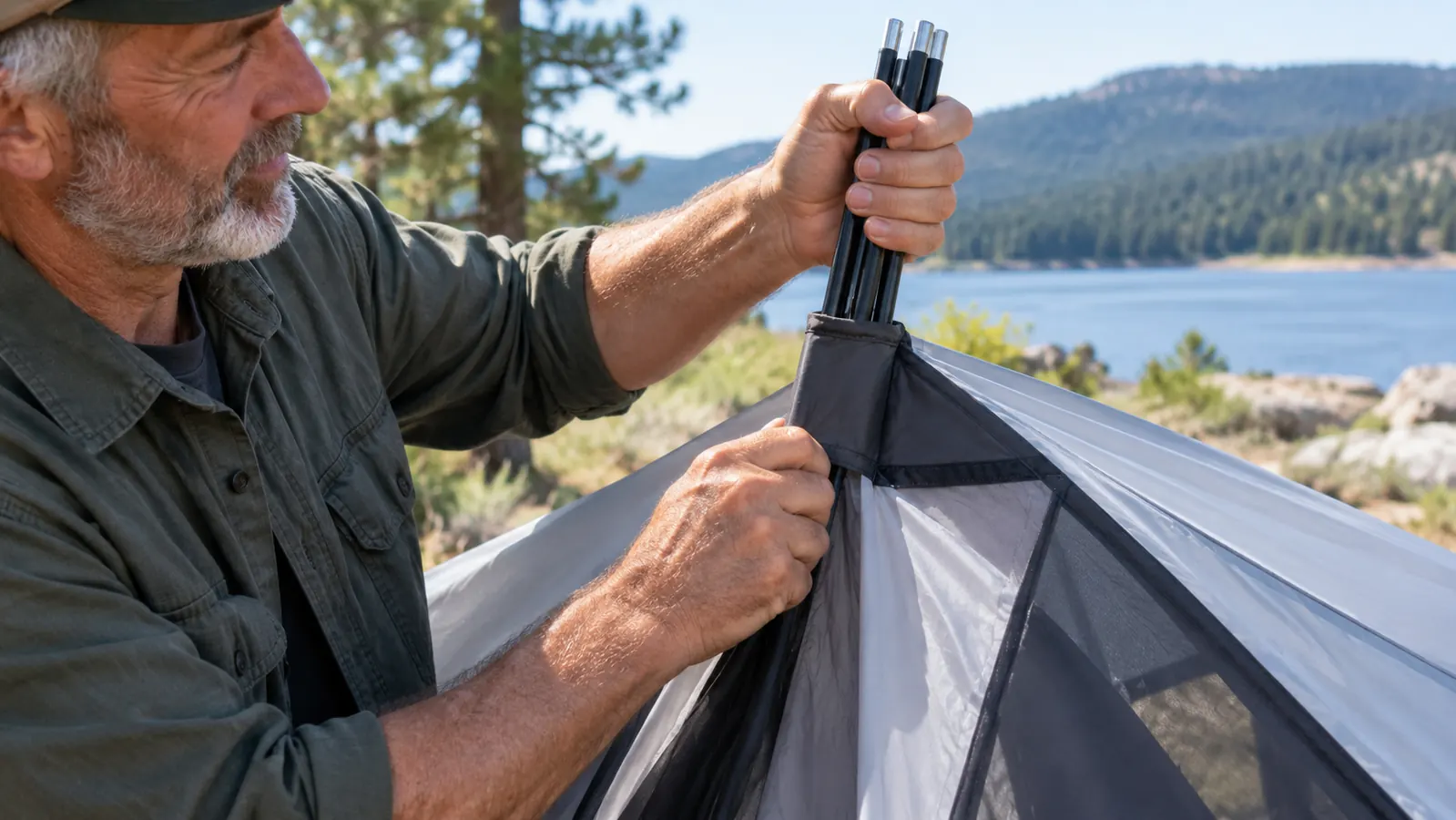
| Setup | Pre-attached poles unfold and click; I can pitch it solo in about 2 minutes | Color-coded poles and continuous sleeves, but still a traditional thread-and-pole setup; plan on 10 to 15 minutes for two people |
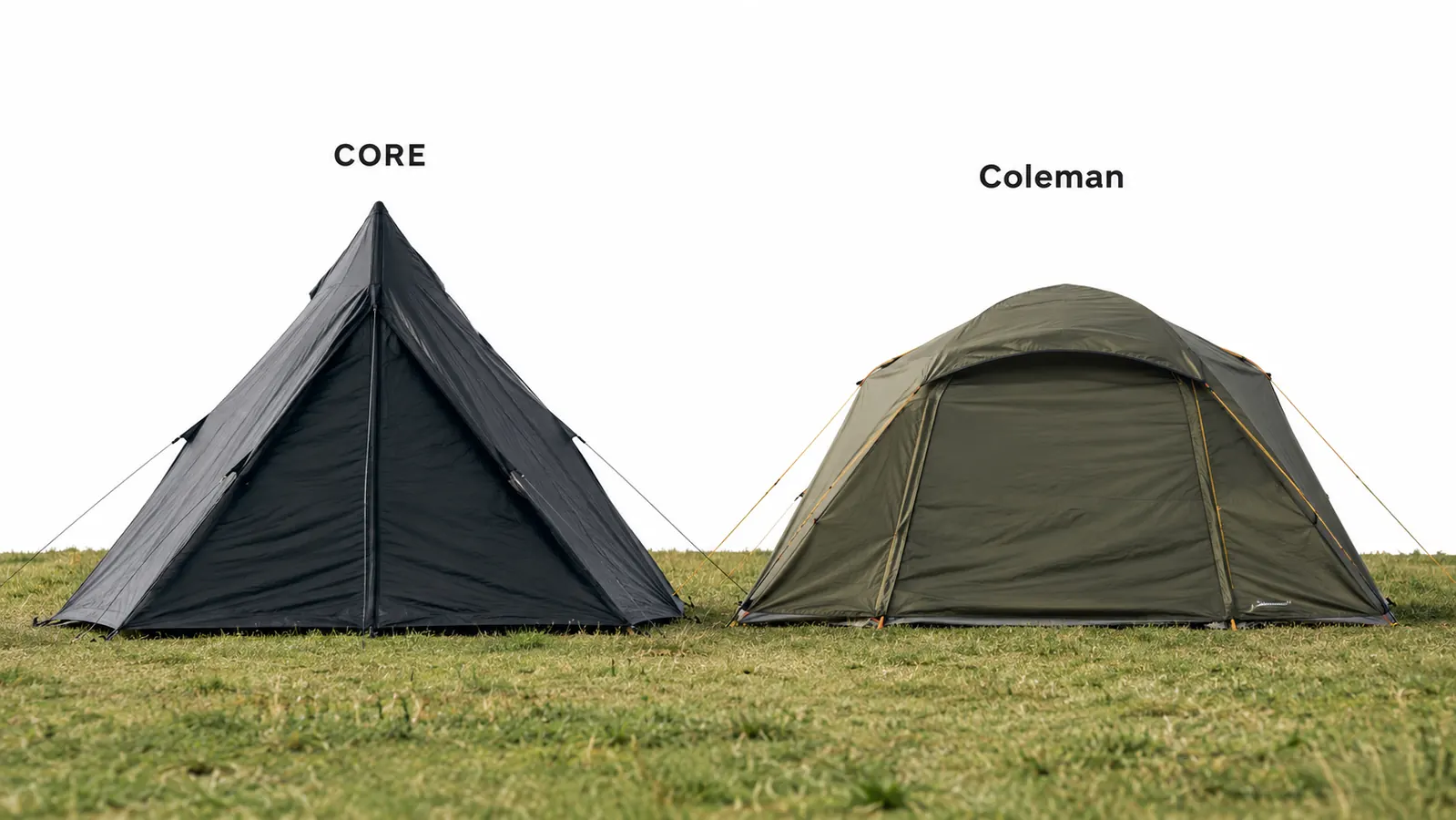
| Headroom | Tall center peak, near-vertical walls, and enough height for cots and a 6-foot-tall teenager to stand up | Good headroom in the center, but the walls slope sooner, so the usable space near the edges is lower |
| Weather | Full rainfly and sealed seams; held up through a Garner storm that flooded the campsite | Better than average for the price, but the rainfly leaves more of the tent exposed and the seams are not all factory-sealed |
| Price | Costs more up front, and has held up across two seasons of regular use | Usually the cheaper ticket, which matters if you camp a couple times a year and store the tent in a garage |
| Weight and packed size | Heavier and bulkier; fine for car camping, a problem for anything else | Lighter and packs smaller, which makes it easier to haul up stairs or fit behind the seats |
| Best for | Families who car camp several times a season and want fast setup plus storm confidence | Budget-conscious campers who want a solid weekend tent and do not mind a few extra minutes of setup |
A note on the table: I am comparing the CORE 9 Person Instant Cabin Tent to the Coleman Skydome in the size most people actually buy for a family, the 6-person version. Coleman makes bigger Skydomes, and CORE makes smaller instant cabins, but this size matchup is the one most families will be deciding between.
Where the CORE Instant Cabin Wins
Setup is the headline, and it is not close. The CORE uses pre-attached poles that fold out and click into place, so I can pitch it by myself in about two minutes, and with Wade helping it is closer to ninety seconds. The Coleman is not a hard tent to pitch, and the color-coded poles help, but it is still a traditional pole-and-sleeve design. On a hot Texas afternoon, with the sun beating down and a 14-year-old asking when lunch is happening, two minutes versus fifteen minutes is the difference between a pleasant start and a grumpy one.
The clearest example came on a Friday night in late June at Garner. We pulled in after a long week, the temperature was still in the mid-90s, and the campsite was a rocky patch of gravel that made every tent peg feel like a small argument. With the CORE, we had the tent standing, the cots inside, and the lantern hanging before Wade had even finished unloading the cooler. The old dome tent would have meant the two of us sweating through the pole routine while Eli waited in the truck. That is the whole case for the CORE in one evening.
Headroom is the second big win. The CORE Instant Cabin has a tall center peak and walls that go up instead of sloping in, which means the space near the edges is actually usable. We run two cots and a camp table inside, and Eli, who is already pushing six feet, can stand up in the middle without hunching. On a rainy afternoon at Pedernales Falls, the three of us sat in camp chairs inside the CORE playing cards while the storm blew through, and we never felt like we were crouching. The Coleman has decent center headroom, but the walls slope in sooner, so the usable space near the edges is lower. If you spend much time inside your tent, especially during a rainy afternoon, that extra headroom is the difference between a comfortable hangout and a cave you only sleep in.
Weather is where the CORE earned my trust rather than just my preference. The storm that killed our old tent hit Garner in the middle of the night, with rain coming in sideways and the campsite flooding around the tent. The CORE did not leak a single drop, and the full rainfly covers both doors, which is exactly where I have seen every budget tent I have owned fail first. I have also had it up in steady wind at a Colorado campsite where the gusts kept the rainfly snapping all night, and the frame never felt like it was working against the wind. In the morning the stakes nearest the door had worked loose, but the tent itself had not sagged a foot.
Where the Coleman Skydome Wins
I will give Coleman full credit where it is due. The Skydome is usually the cheaper tent, and for a family that camps a couple of times a year and keeps the tent in the garage, that lower price is a real advantage. It is also lighter and packs smaller than the CORE, which makes it easier to haul from the car to the site, easier to fit behind the seats of a packed 4Runner, and easier to store in a small space. When I packed the Skydome into its bag the first time, I noticed the whole bundle was noticeably shorter than the CORE's, and I could lift it with one hand. If you are not sure how often you will actually go camping, spending less on the tent is a reasonable way to find out.
The Coleman also has a wider footprint for its rated size, which means the sleeping area is spread out more. If your priority is floor space for sleeping bags on the ground rather than vertical space for cots and standing up, that layout works in the Skydome's favor. And I have to say, the Coleman's zippers were smooth the whole weekend, which is more than I can say for some budget tents I have used. For a weekend tent at a lower price, it is a solid, honest piece of gear.
One thing the Skydome did better than I expected was handle the Saturday afternoon heat at Pedernales Falls. The wider footprint meant we could spread the sleeping bags out flat, and the higher mesh-to-solid ratio on the upper walls let more breeze move through when the air was still. On a night when the temperature only dropped to 78, that airflow was the difference between sleeping okay and lying there staring at the ceiling. It is a real strength of the Coleman design, and I would not want to pretend otherwise.
Two minutes versus fifteen minutes is the difference between a pleasant start and a grumpy one when the Texas sun is already cooking the campsite.
What Two Seasons Taught Me About the CORE
The reason the setup speed matters more than it sounds is that it changes how often you actually use the tent. A tent that takes two people 25 minutes to pitch is a tent you talk yourself out of using for a single night. A tent that takes two minutes is a tent you take on a whim. Since spring 2025, the CORE has been on more trips than any tent we have owned, and most of those trips would not have happened with the old dome.
The other thing two seasons taught me is that the CORE handles weather better than I expected. The Garner storm that leaked through the seams of our old tent did not put a drop inside the CORE, and the full rainfly covers the doors, which is exactly where a lot of tents leak first. After a week in Colorado with cold nights, I also appreciate that the fabric is a heavier weave. It does not feel like a summer-only tent. It also dries fast after a morning shower, which matters when you are trying to pack up camp before checkout and the sun is already working on the tent.
I should also mention the things that annoy me about the CORE, because no tent is perfect. It is heavy, and the carry bag is not much more than a stuff sack with a strap, so hauling it any real distance is a two-person job. The poles are permanently attached, which is what makes setup fast, but it also means you cannot pack the tent down into a smaller, flatter bundle the way you can with a traditional tent. And the footprint is big, so you need a campsite with some room to spare. At Garner we have had to turn the tent sideways on the pad to make it fit. None of that changes my verdict, but it is the honest tradeoff for the speed.
Who Should Buy Which
Buy the CORE Instant Cabin Tent if you car camp several times a season, if you want to be able to set up camp in two minutes, if you use cots or want to stand up inside, or if you camp in a part of the country where storms show up without much warning. It costs more, and it is heavier and bulkier, but it earns that back every single trip.
Buy the Coleman Skydome if you are just getting into camping, if you camp once or twice a year, if you mostly sleep on the ground rather than on cots, or if price and packed size matter more than setup speed and headroom. It is a good tent, and the money you save could go toward a nicer campsite, a better cooler, or a second trip.
And if you are still deciding: think about what makes you actually go camping. For our family, that thing is a tent that sets up fast enough to feel like a vacation from the moment we arrive. That is the CORE.
Still weighing it? The CORE is the tent I have kept for two seasons.
The CORE 9 Person Instant Cabin Tent has survived Texas storms, Colorado cold, and a teenager's 6 a.m. zipper habit. Check today's price on Amazon.
Amazon Check Today's Price on Amazon →