
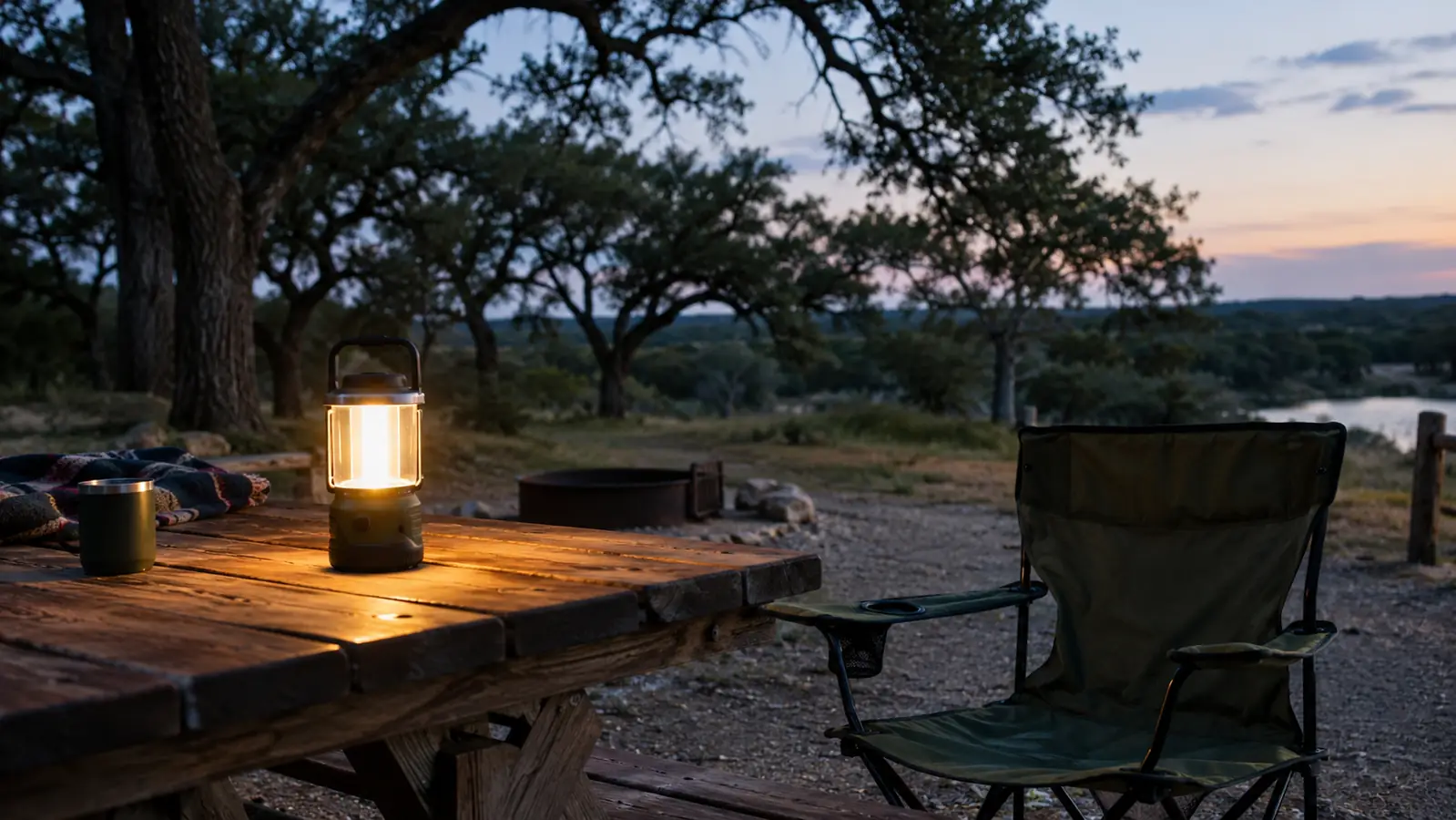
The old lanterns ate D cells like a camp stove eats propane, and by the second night of a Garner trip we were rationing light. That was the summer I started looking at rechargeable lanterns and landed on the Lepro 1000LM Rechargeable Camping Lantern. I bought two in June, and after a full season of car camping out of our 2017 Toyota 4Runner, I have opinions. Short version: it is the piece of gear I would replace first if the truck got broken into, and I have never once wished for the old battery eaters back.
The Quick Verdict
A bright, dead-simple rechargeable lantern that costs nothing to run and has survived a Texas summer in my truck bed. It is not the cheapest lantern on Amazon, and the battery gauge is a guess, but for family car camping it is the one I grab first.
Amazon Check Today's Price →The lantern that ended our D-cell habit
Two Lepro lanterns replaced a drawer full of dying batteries in our camp box. If you are still carrying spares for a lantern that eats alkalines, this is the switch that pays for itself by the third trip.
Amazon Check Today's Price on Amazon →How I've Used It
We are weekend car campers, not thru-hikers. That means the lantern lives in a plastic tub in the back of the 4Runner between trips, gets thrown onto the picnic table at dusk, and hangs from the tent loop at night. My husband Wade and our 14-year-old son Eli each grab one when they head to the vault bathroom after dark. In six months the two Lepro lanterns have been to Garner, Pedernales Falls, Guadalupe River, and a long July weekend at a Hill Country ranch where the power flickered for three days.
My testing is not laboratory testing. It is the kind of testing that matters to a family that camps maybe eight weekends a season: Does it light the table for dinner? Does it hang without dropping? Does it survive being packed wet, dusty, and upside down? Does it hold a charge between trips when I forget to charge it? The Lepro answered yes to all of it, with exactly two complaints I will get to.
Weather and bugs are the other constant, and the July trip proved the lantern was more than a campsite light. We were at a Hill Country ranch for a long weekend when a line came down in a storm and the power flickered for three days. The Lepro became the house light. It ran on high in the kitchen window for the first evening, moved to the porch for dinner, and clicked down to red in the bedroom at night. When we needed it back at full strength, I charged it off the 4Runner's USB port on a grocery run, which is the one thing the old D-cell lanterns could never do. Eli figured out the red mode before I did and started calling it the bat signal. By Sunday I had stopped thinking of the Lepro as camping gear and started thinking of it as the lantern that lives in the truck, which is a higher bar than any review can set.
The Specs, Translated
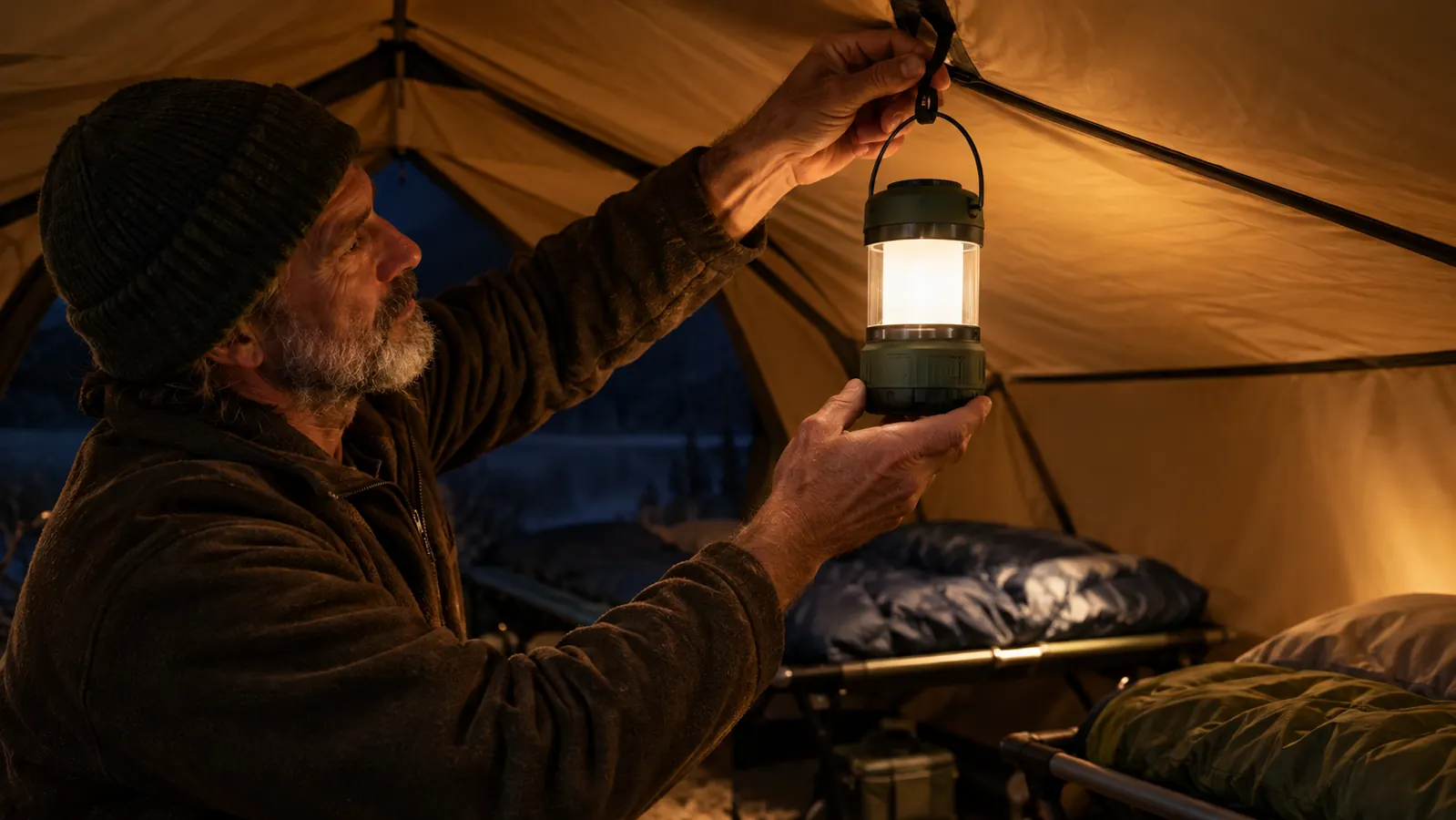
The title says 1000 lumens, 4400mAh, and four light modes. Here is what that means at a campsite. On high, this thing lights a full picnic table and the chairs around it, which is the whole job. On the lowest mode it is a nightlight that lets Eli find the tent zipper at 2 a.m. without waking the whole county. The four modes are high, medium, low, and a red light, and I use all of them, which is more than I can say for most gear. The red mode is the one I did not expect to love: it keeps your night vision intact for middle-of-the-night bathroom runs, and it does not draw every bug on the Guadalupe to the table.
One thing to know about the 1000 lumen claim: it is a real 1000 lumens on high, and it is genuinely bright. The first night I turned it on at Garner, Wade said it looked like a car headlight on the table, and he was not wrong. That is a feature and a warning. If you hang it low in a small tent, it is a lot of light. We learned to hang it near the door or use the low mode inside. The Lepro does not have a diffuser that softens the beam, so you are getting what the bulb gives you.
The hanging loop is worth its own sentence because it is the detail cheap lanterns get wrong. There is a loop on the body, so when you hang it from a tent loop or a branch, the light points down at the table instead of at the treetops. That sounds like a small thing until you have spent a trip with a lantern that only lights the ceiling of the tent. The loop does not stick out far enough to snag anything in the gear tub, which is more than I can say for the handle on the old battery lantern. And because the four modes are controlled by that single button, Eli can work it in the dark without a tutorial. That is the real test of any camping gear in this family: if a 14-year-old can run it at 2 a.m., it passes.
Battery Life and Charging, the Honest Version
Lepro claims the 4400mAh battery runs for a long time on low, and I believe it, because we have never once killed one in a single weekend. Our pattern is to run it on medium for the evening, maybe three hours on the table, then low or red overnight. We have done two nights in a row on a single charge and the light was still going strong on the drive home. The battery indicator on the side is the weakest part of the design. It shows green, yellow, or red, and the red light appears earlier than I expect, then lingers for hours. I have stopped trusting it and instead just charge both lanterns the day before a trip, which takes maybe four hours to go from empty to full.
The charging port is a micro USB on the bottom, covered by a small rubber flap. That flap is the one thing I worry about long term, because it is the only part of the lantern that feels like it could fail. So far, after a season of being shoved into a tub with tent stakes and a cast iron skillet, it is still sealing fine. I pack it with the flap facing up and I do not think about it again. For charging, I use the cable it came with, plugged into a USB battery pack or the 4Runner's port on the drive home. There is no wall adapter in the box, which is fine for us because we always have a USB brick, but worth knowing if you expected one.
I tested the charge time on purpose once, the way I test everything, with a stopwatch on the kitchen counter. From the red light to full took about four hours on a standard USB wall brick, and the lantern stayed usable on medium the whole time it charged. The first time I forgot to charge them before a trip, we were already an hour down the road to Guadalupe River when I remembered. I plugged one into the 4Runner's USB port for the rest of the drive, about 45 minutes, and it came up off red to yellow. It made it through the whole evening on medium, which told me the battery holds more in reserve than the indicator suggests. That was the moment I stopped trusting the gauge and started trusting the battery.
Two nights on a single charge, and we were still the brightest campsite on the loop. The old D-cell lanterns never made it past one.
How It Handled Texas Weather
We camp in the kind of heat that makes other states' campers stay home. In July at Pedernales, the high hit 102 and the lantern sat in the sun on a metal table for most of the day. It got hot enough that I would not have wanted to hold it bare-handed, and it still lit up fine that evening. The Lepro is not marketed as a rugged lantern, but it has survived being dropped onto gravel, kicked across the tent floor, and left out in a light rain once when we were slow to clear the table. The rain was the one that impressed me. We came back from a hike, the lantern was sitting in a puddle on the picnic table, and it turned right on. The charging flap was dry, which is the detail that matters.
Cold is the other direction. On our October trip to the Colorado mountains, the nights dropped below freezing and the lantern sat outside on the table while we made dinner. Lithium cells do not love cold, and the Lepro did dim a little after an hour in 25-degree air. Bring it inside the tent or tuck it in a jacket pocket when the mercury drops, and it will behave. That is normal behavior for any rechargeable, not a defect in this one.
The rain at Garner deserves its own mention because it was the same kind of storm that used to end our trips early. A line of weather blew through on a Saturday afternoon, the kind where you grab the coolers and watch the tent. The lantern was on the picnic table, and we simply did not get to it. It sat out in the open for the better part of an hour, took a direct splash when the rain finally came, and lit up that night like nothing had happened. I dried the base with a towel and checked the charging flap, which was sealed. I have owned rechargeable gear that would have died from less, and I have owned battery lanterns that would have corroded from that much moisture. The Lepro just shrugged.
What I'd Change
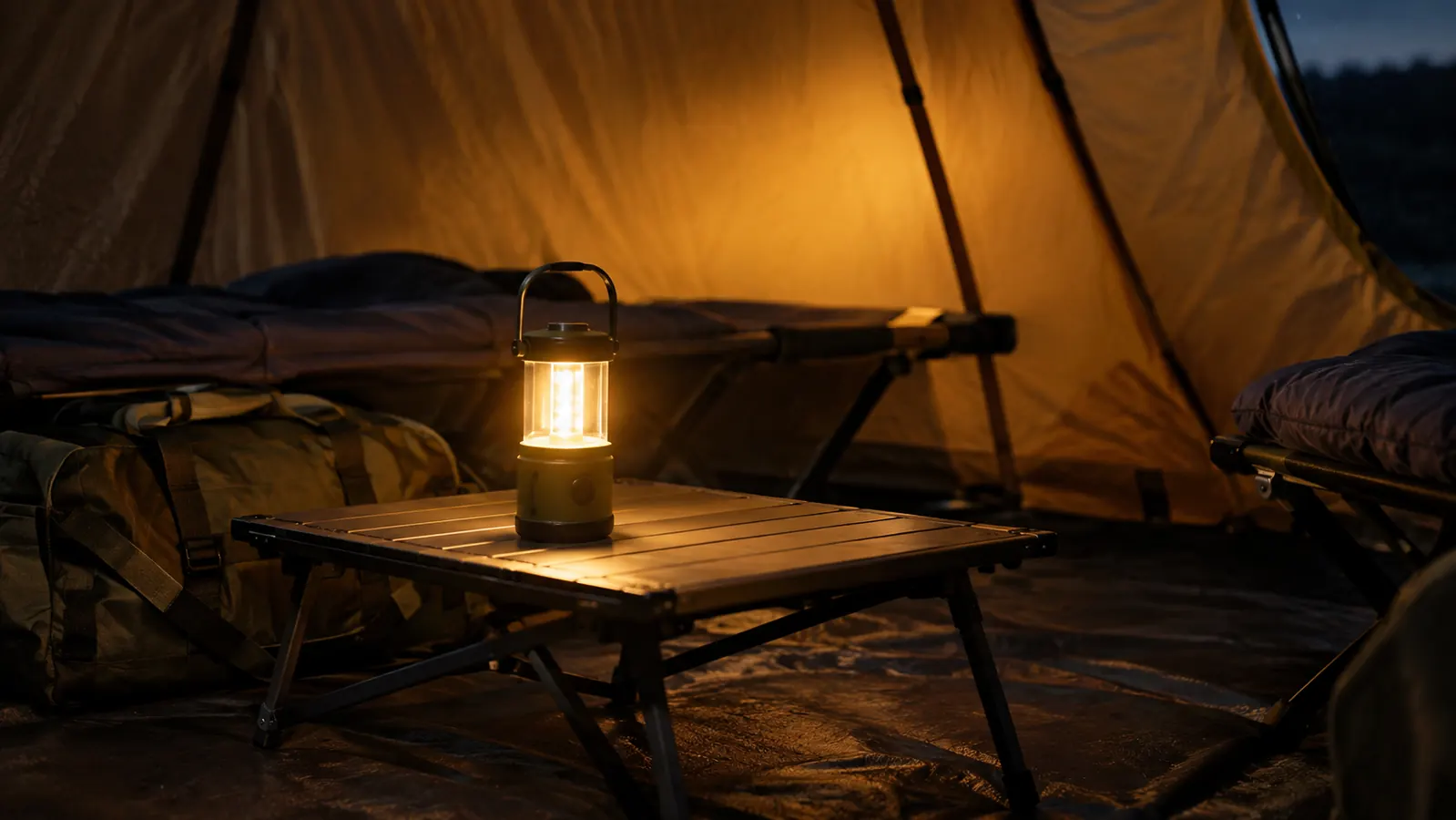
The battery meter is my first nitpick, and I have already mentioned it. My second is the button. It is a single rubber button on top that cycles through the modes, and there is no way to turn the light on directly to low. You always start on high, then click down. At the campsite that means one blinding second of 1000 lumens every time you need light at 2 a.m. I have learned to point it at the ground when I click it on, but it is a design choice I would change. A memory function, or a long-press for low, would make this a 9.5 out of 10 lantern instead of an 8.7.
The other thing I would change is the charging cord. Micro USB is fine, and I have a drawer of them, but the cable in the box is short, maybe a foot and a half, which means the lantern has to sit on the floor or a chair while it charges. It is not a reason to skip the lantern. It is a reason to keep a longer cable in the camp tub, which I now do. And if you buy two like I did, label them, because they are identical and you will spend ten minutes at the campsite trying to remember which one you charged. We put a strip of orange tape on Eli's, and the argument ended.
What I Liked
- Really is bright enough to light the whole table, not just a corner of it
- Two full nights on one charge in our real-world use
- Red light mode that preserves night vision and does not draw bugs
- Survived sun, gravel, a puddle, and a season of being tossed in a gear tub
- Charges from any USB port, so no wall adapter required
Where It Falls Short
- Battery indicator is a guess, not a gauge
- Always powers on at full brightness, which is rude at 2 a.m.
- Micro USB flap is the one part that feels like it will wear out eventually
- No diffuser, so the high beam is harsh in a small tent
Who This Is For
This lantern is for the family that car camps a few times a season and wants to stop buying batteries. It is for the parent who is tired of the 2 a.m. flashlight fumble, the scout leader who needs to light a picnic shelter, the tailgater who wants one bright light instead of three dim ones. If you camp out of a vehicle, which we do out of our 2017 4Runner, the size and weight are non-issues. It is a little bigger than a soda can and weighs almost nothing, so it takes up less room in the tub than the pack of D cells it replaces.
Who Should Skip It
Skip it if you need a lantern that runs for a week in the backcountry with no way to charge, because this one is rechargeable and that is the trade. Skip it if you want a soft, diffused glow for a small tent, because the Lepro is a bright point source and you will be clicking it down to low every night. Skip it if you are the kind of person who loses cables, because you will need to keep track of the micro USB cord. And if you already own a good rechargeable lantern that you actually remember to charge, you do not need this one. The Lepro is a great lantern, but no lantern is worth buying if the one you have is already doing the job.
For us, the math was simple. We were spending money on D cells every other trip, squinting at a dim table, and fighting a lantern that weighed more than the food. The Lepro fixed all three. It is not the cheapest rechargeable lantern on the market, and it is not perfect, but it is the one I grab first when I am packing the tub, and it is the one I would buy again tomorrow. That is the recommendation that matters.
The one lantern I pack first, every trip
After a season of Texas heat, one rainstorm, and a freezing mountain night, both Lepro lanterns still work like the day they arrived. That is the whole review. If your camp box still holds battery lanterns, this is the upgrade.
Amazon Check Today's Price on Amazon →