
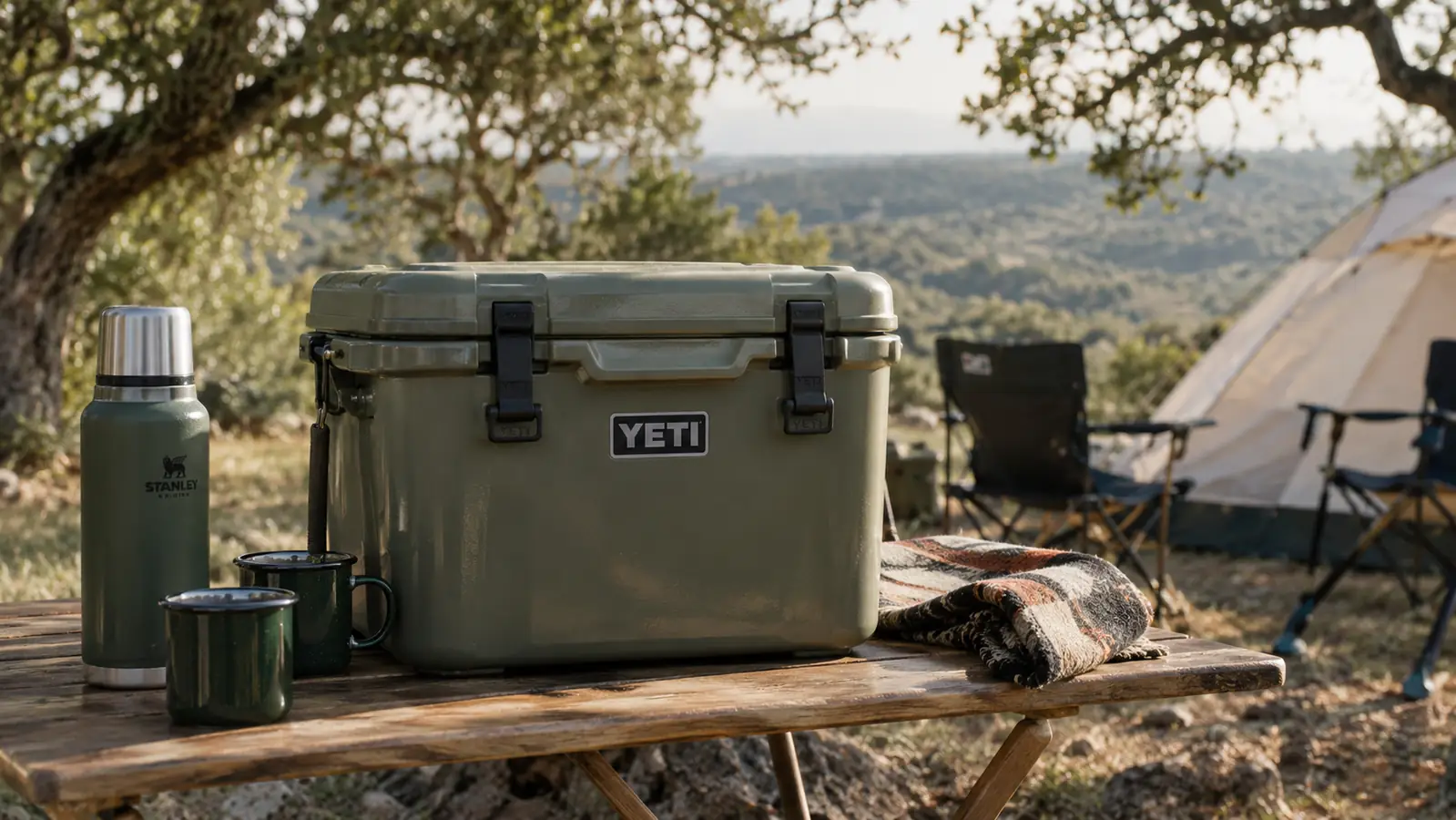
Every cooler review you read starts the same way: this thing held ice for six days. Mine does not start that way, because that is not what happened. I bought the YETI Tundra 45 in the spring of 2025, after one too many Texas weekends where my old plastic cooler was mostly water by Saturday afternoon. Eighteen months and about a dozen trips later, I have a more honest number: the Tundra 45 keeps ice for about two and a half days in Texas summer heat when a family of three opens it all weekend. That is still three times longer than the cooler it replaced. But it is not six days, and nobody tells you that part before you buy one.
I want to be clear about who this review is for. I am not an overlanding influencer, and I do not spend a month at a time in the backcountry. I am a 46-year-old who car camps out of a 2017 4Runner with her husband Wade and our 14-year-old son Eli, mostly at Garner, Pedernales Falls, and the Guadalupe River, plus one trip a year to the Colorado mountains. I bought the Tundra 45 with my own money, and I have used it hard for a year and a half. If you camp like my family, this review is for you. If you only need a cooler for two trips a year, keep reading before you spend, because the honest answer might be that you do not need this one.
The Quick Verdict
The best cooler I have owned, and also the heaviest and the most expensive. It earns its keep if you camp in real heat all season. It is overkill if you do not.
Amazon Check Today's Price →Tired of buying ice every morning of every trip?
The YETI Tundra 45 ended that pattern for us. It is heavy, it needs a little planning, and it costs more than any cooler should. It also means I have not bought a bag of ice on a camping trip since spring 2025. If you camp in heat and want to stop feeding the ice machine, this is the one.
Amazon Check Today's Price on Amazon →How I've Used It
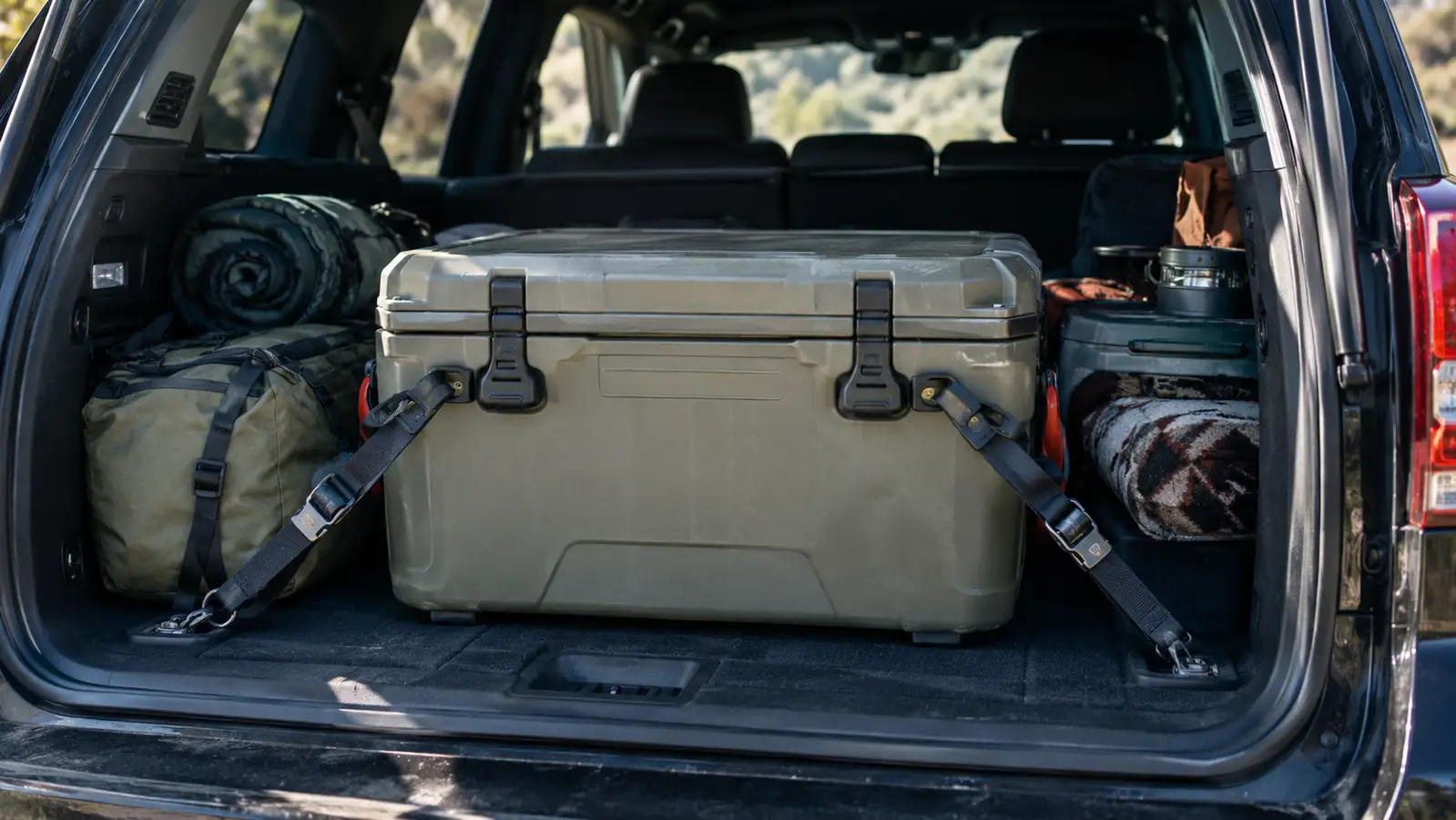
The Tundra 45 has been on every trip since I bought it in spring 2025. That is about a dozen weekends at Texas state parks, one week in the Colorado mountains, and a handful of day trips to the river. It rides in the back of our 4Runner, strapped down with tie-downs through the molded AnchorPoint slots, and it has never moved an inch, even on the washboard gravel roads into Garner.
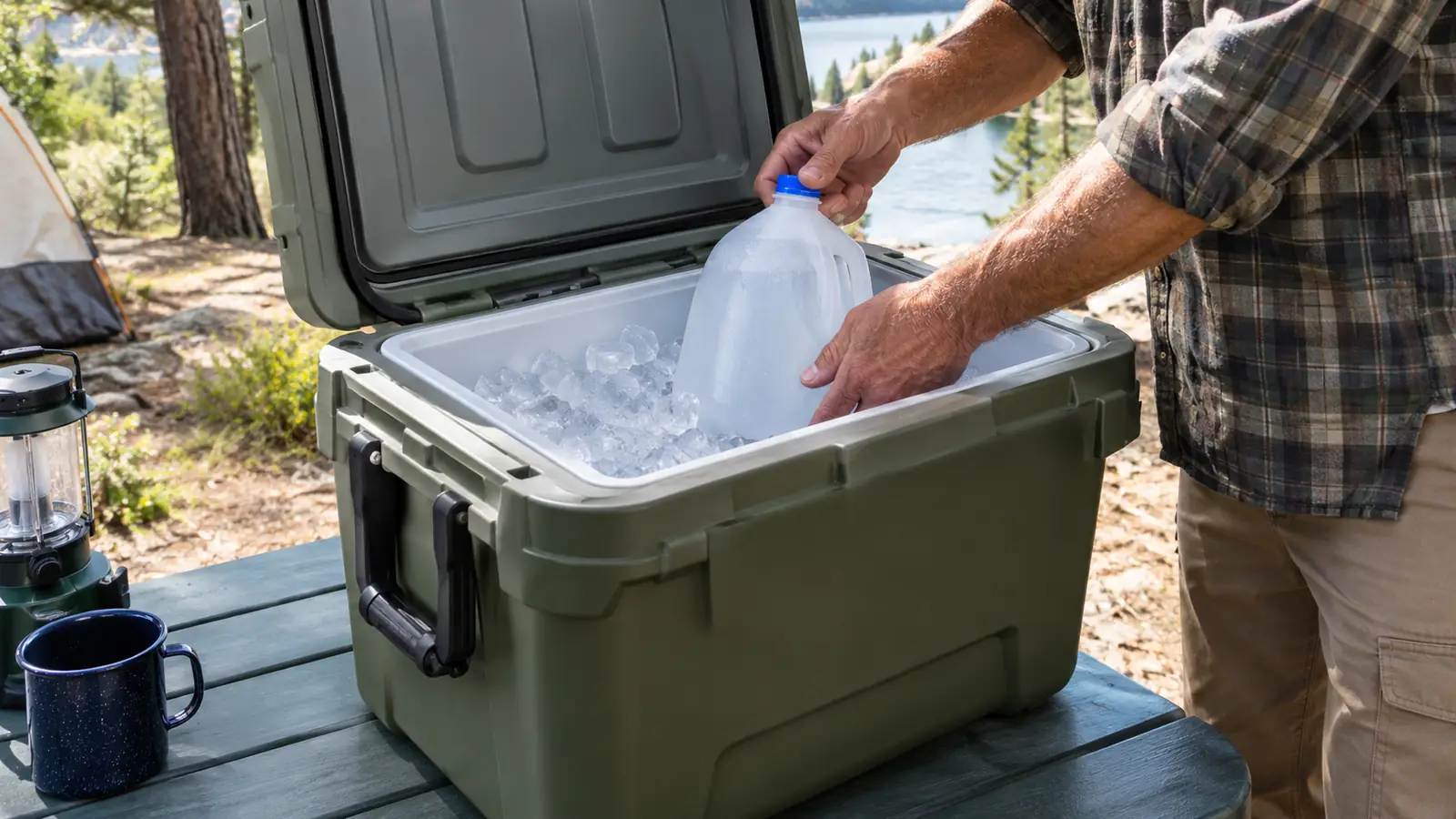
My routine is simple, and it matters. The night before a trip, I put the cooler in the house with a bag of ice in it to pre-chill the interior. In the morning I dump the melt, pack in cold food and drinks, and add fresh ice at about a two-to-one ratio of ice to contents. On a normal weekend I am opening it constantly, because that is what a 14-year-old does. On those trips I get about two and a half days of real ice in July.
In the Colorado mountains, with cooler nights and less opening, I have had ice last five full days. The difference is not complicated. It is starting cold, packing cold, and not standing there with the lid open deciding what you want. The cooler does its part. You have to do yours.
The first trip was Garner in April 2025, and I packed it like I packed every cooler before it: no pre-chill, whatever ice was left in the bag, and the lid open while I looked for the mustard. I got about a day and a half of ice. The cooler was not the problem. My habits were. Once I changed the habits, the cooler showed what it could do.
What Nobody Tells You About Ice
Here is the part the marketing does not lead with. The famous ice retention numbers assume a pre-chilled cooler, a high ice-to-contents ratio, and minimal opening. That is not how a family camps. The Tundra 45 holds roughly thirty cans at a two-to-one ice ratio, which sounds like a lot until you load in a gallon of water, a pack of hot dogs, and the stuff Eli will not eat unless it is cold.
The honest number from my notebook: two and a half days of solid ice in a Texas summer, three if I am careful, and that is with the pre-chill routine. My old plastic cooler gave me about twelve hours before the ice was floating. The soft-sided cooler I used before that was worse. So the Tundra 45 is a genuine improvement, and it is still not the six-day cooler you see in the ads.
The other thing nobody tells you: a 45-quart cooler is a two-person cooler that three people can make work. It fits behind the front seats of a 4Runner, and not much else. Two-liter bottles do not stand up in it, because the interior is about eleven and a half inches tall and a two-liter is taller than that. You learn to pack around that, but it is a real limitation.
The ice management routine matters more than the cooler. I keep drinks in a separate cheap cooler now, and the Tundra holds the food that has to stay cold. That one change stretched my ice by a full day. Nobody tells you that the best way to use a premium cooler is to not open it for every soda.
The Weight Is the Price of the Insulation
Nobody tells you that the Tundra 45 weighs 26 pounds empty. That is the trade for three-inch walls and rotomolded construction, and it is worth understanding before you buy. Loaded with ice and food, this cooler is a two-hand, bend-your-knees lift out of the back of the 4Runner. I am 46 and I feel it. Wade usually grabs it, and I am fine with that.
The single rope handle is comfortable, and it is the only handle on the 45. The larger Tundras get a handle on each end so two people can carry them. The 45 does not, which means one person carries the whole thing, and a loaded 45 is a lot of cooler for one person. If you have ever lifted a full cooler out of a truck bed, you know exactly what I mean.
The weight also matters on the way home. A cooler that was manageable on the way out is heavier on the way back, because you are tired and the cooler is full of water. I have learned to drain mine at the campsite before we pack up. The drain plug works, but it works better if you tilt the cooler, and tilting a loaded 45 is its own workout.
One more weight note: the 45 is small enough to fit on the back seat floor of the 4Runner, which is where it rides when the cargo area is full. Getting it in and out of the back seat is harder than the cargo area, because you are lifting it over the seat and around the door frame. We keep a folded moving blanket under it to save the upholstery and to give it a non-slip surface.
Two and a half days of ice in a Texas summer, with a pre-chilled cooler and a two-to-one ice ratio. That is the real number, and it is still three times what my old cooler gave me.
The Little Things That Annoy Me
An honest review has to include the annoyances, so here they are. The lid does not stay open on its own. There is no strut or stay, so you hold it with one hand while you dig with the other, which is exactly when you have a cold drink in the other hand. It is a small thing. It is also a thing you will notice every single trip.
The gasket needs a clean rim to do its job. Grit, sand, or a smear of melted ice cream on the lip means the seal is not as good, and the whole point of this cooler is the seal. I wipe the rim before I close it, every time. It takes five seconds, and it matters more than any other maintenance on this thing.
The drain plug twists out, and mine has a tether so it does not get lost. Draining still takes patience. You have to tilt the cooler and wait, and the last cup of water always hides in a corner. I have also learned to check that the plug is snug before loading, because a loose plug is a slow leak and a wet truck bed.
The latches are the heavy rubber T-Rex latches, and they are genuinely tough. You can run a small padlock through them, which is nice for keeping a bear out of your food, with the emphasis on out of your food and not out of your camp. Bear-resistant is not bear-proof, and the rangers at Garner will tell you the same thing.
Where the Tundra 45 Shines
With all that said, I would buy the YETI Tundra 45 again. The durability is the headline. My old coolers developed cracks, warped lids, and broken hinges. This one looks the same as the day I bought it, after eighteen months of being thrown into a truck, rained on, baked in the sun, and used as a seat at the campsite. Rotomolded construction means there are no seams to split, and that is the whole reason it keeps ice and the reason it will outlive me.
The five-year warranty is real, and it follows the cooler, not the original receipt. The Amazon listing sits at 4.7 stars across close to five thousand reviews, and for once the rating matches the product. Resale value is also real, because these things hold up. And the tie-down slots work exactly the way they should. I use two ratchet straps through the AnchorPoints, and the cooler does not slide, even on the washboard road into Garner.
The bear-resistant rating is a genuine feature at Texas state parks, where the raccoons are bold and the black bears are not shy. I have had raccoons test this cooler, and they got nothing. That is a real benefit, not a marketing one.
How It Compares to the Alternatives
The cooler I replaced was a cheap plastic one from a big-box store, and the difference is not subtle. The cheap cooler was lighter, sure, and easier to carry. It also leaked, cracked, and turned ice to water by the second morning. The Tundra 45 has none of those problems, and the trade is weight and price. You are buying fewer trips to the ice machine, and you are paying in cash and in back strength.
The rotomolded alternative people ask about most is the Igloo BMX, and it is a fair question. Both are rotomolded, both keep ice for days, and the BMX costs meaningfully less. What the Tundra has is the tighter gasket, the better latches, and the warranty. Whether that difference is worth the price difference is exactly the decision I was stuck on, and the answer depends on how much you camp. The long view on rotomolding and why it works is worth reading before you decide.
One thing I will say for the cheaper option: if you lose coolers, if you lend them out, or if you leave them on the picnic table at the end of the season, buy the cheaper one. A cooler you do not worry about losing gets used more than a cooler you are afraid to scratch. The Tundra is a tool I take care of, and that is part of the deal.
What I Liked
- Holds ice for two and a half days in Texas summer, three times what my old cooler managed
- Rotomolded body with no seams, so nothing to crack or split
- Tie-down slots and non-slip feet keep it put in the back of the 4Runner
- Five-year warranty and strong resale value
- Bear-resistant, which matters at Texas state parks
Where It Falls Short
- 26 pounds empty with a single handle, so a loaded 45 is a two-person lift
- Lid does not stay open on its own
- Needs pre-chilling and a clean gasket to hit its ice numbers
- The price, which is hard to justify if you camp twice a year
Who This Is For
Buy the Tundra 45 if you camp in real heat, if you camp often enough that buying ice every morning has become a line item in your trip budget, and if you are tired of replacing coolers every couple of seasons. It is also the right call if you camp anywhere with bears or bold raccoons, because the bear-resistant rating is a genuine peace-of-mind feature. My family camps about a dozen weekends a year, and for us the cooler has paid for itself in ice not bought and coolers not replaced.
If you recognize yourself in that, the Tundra 45 is the right size for a family of three. Not the 65, which is heavier and harder to lift into a 4Runner, and not the 35, which runs out of room by Saturday. The 45 is the balance point, and eighteen months in, I have not once wished for a different size.
Who Should Skip It
Skip it if you camp twice a year in mild weather, because a good rotomolded cooler at a fraction of the price will do everything you need, and the weight and price of the YETI will just annoy you. Skip it if you backpack or hike any real distance, because 26 pounds empty is absurd for anything you carry on your back. And skip it if you are buying it for the name. The Tundra 45 is a genuinely great cooler. It is also a heavy, expensive one, and the honest advice is that not everyone needs that.
If you mostly camp in spring and fall, when the nights are cool and the days are short, a decent cooler with a bag of ice will get you through a weekend. Spend the difference on a better tent or a better stove. The Tundra earns its keep in heat, and if you do not camp in heat, it is a lot of money and weight for a problem you do not have.
The cooler that ended our ice problem, honest caveats included
If the honest numbers sound like your kind of trip, the Tundra 45 is the cooler I would buy again. Pre-chill it, pack it cold, and you get days of ice instead of hours. Check today's price on Amazon and see if it fits your budget.
Amazon Check Today's Price on Amazon →