
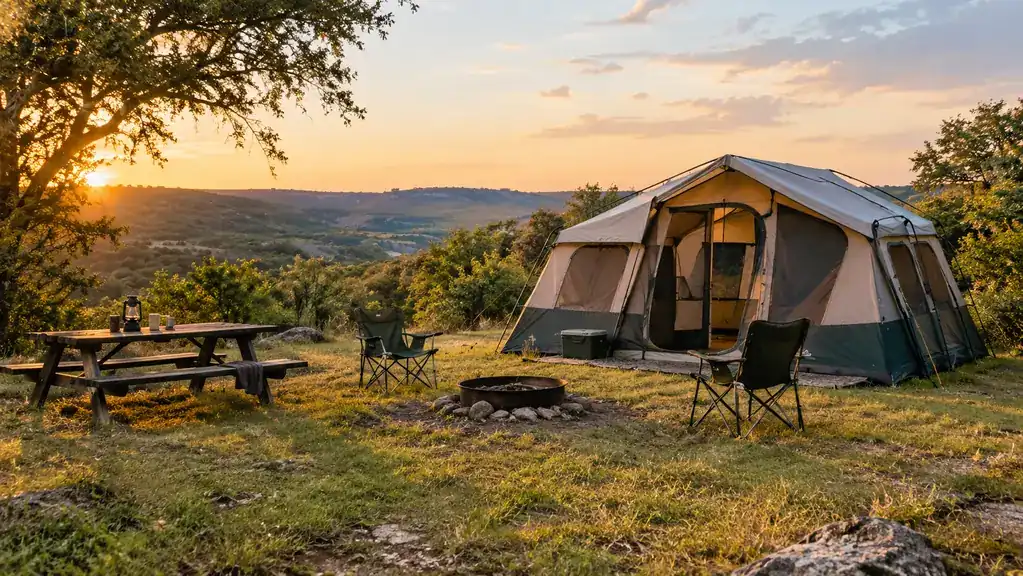
I'll be honest with you: the CORE 9 Person Instant Cabin Tent is the most convenient tent I have ever owned, and it is also the one I have the strongest opinions about. I bought mine in spring 2025, right before a Garner State Park trip, because I was tired of wrestling with the old dome tent that took Wade and me twenty-five minutes to set up and leaked at the seams when a storm rolled through. Two seasons and maybe fifteen camping trips later, I still reach for it every time we car camp. But I have also learned exactly where it cuts corners, and those are the things I want to talk about.
Before I get into the details, here is the short version. The CORE Instant Cabin Tent sets up fast, gives three of us room to spread out, and has held up through Texas heat, wind, and one sudden Hill Country storm. It is not a backpacking tent, it is not a four-season tent, and the 9-person size is more about floor space than sleeping nine people. If you go in expecting a spacious family basecamp that goes up in minutes, you will be happy. If you expect it to survive a mountain winter or fit in a duffel, you will not.
The Quick Verdict
The fastest family tent I have owned, with real tradeoffs in size, storage, and storm behavior. Buy it for quick setup and roomy car camping, not for harsh weather.
Amazon Check Today's Price →A family tent that sets up before the kids get bored
The CORE 9 Person Instant Cabin Tent is my pick for weekend car campers who want more time at the fire and less time fighting poles. See today's price on Amazon and read the details below before you decide.
Amazon Check Today's Price on Amazon →How I've Used It
Since spring 2025, this tent has been to Garner State Park, Pedernales Falls, Guadalupe River State Park, and one long week in the Colorado mountains. That is about fifteen nights total, in conditions that range from ninety-eight degree afternoons to a night when the wind snapped a neighbor's canopy. I have set it up in daylight, at dusk, and once in a light rain. I have slept on a cot, on an air mattress, and on the ground with a pad. I have also left it standing for three days straight in summer sun.
My usual setup is me, my husband Wade, and our fourteen-year-old son Eli. We use the 9-person size on purpose because we bring cots, a camp table, and duffel bags, and we like to stand up and change without elbowing each other. The tent swallows all of it. That is the main reason I keep choosing it over smaller options.
What the Instant Setup Actually Looks Like
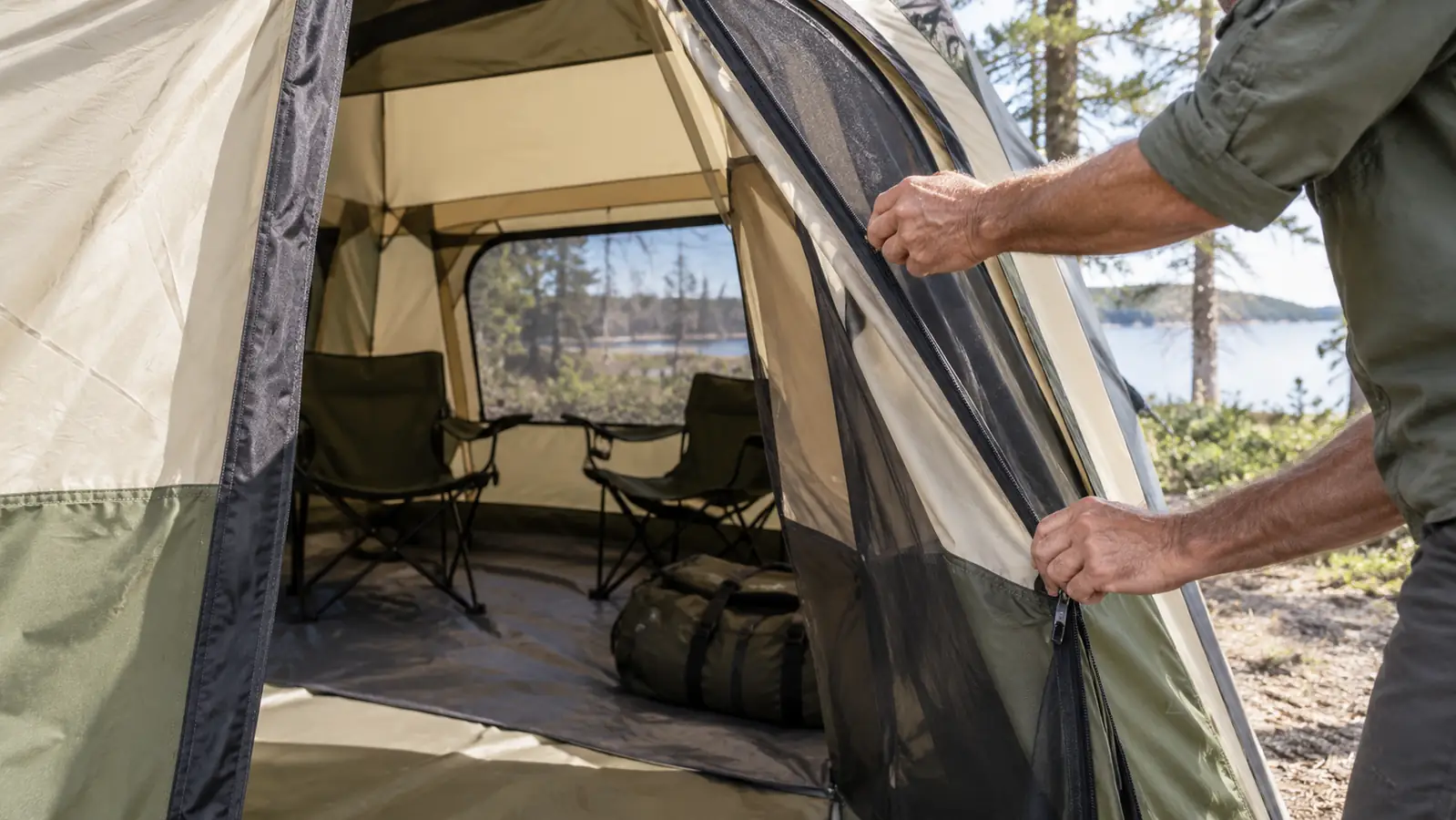
The headline feature is real. The poles are pre-attached to the tent body, and the whole thing unfolds like a pop-up on a bigger scale. You stake one corner, pull the opposite corner, and the frame locks into place. The first time I did it alone, it took me about three minutes including the rain fly. With two people, it is closer to two. That is not marketing math; that is me with a stopwatch on a gravel pad at Pedernales.
Take down is where the honesty comes in. Getting the poles to collapse back into the folded shape takes practice and a little patience. The tent has to be dry, or you are fighting damp fabric that does not want to fold. I have learned to do it in a specific order: pull the center hub, fold the side poles in pairs, then roll. If you skip the order, you end up with a lumpy bundle that barely fits the bag. The bag itself is functional but not generous, and the zipper on it is the first thing I would replace.
Where It Earns Its Keep
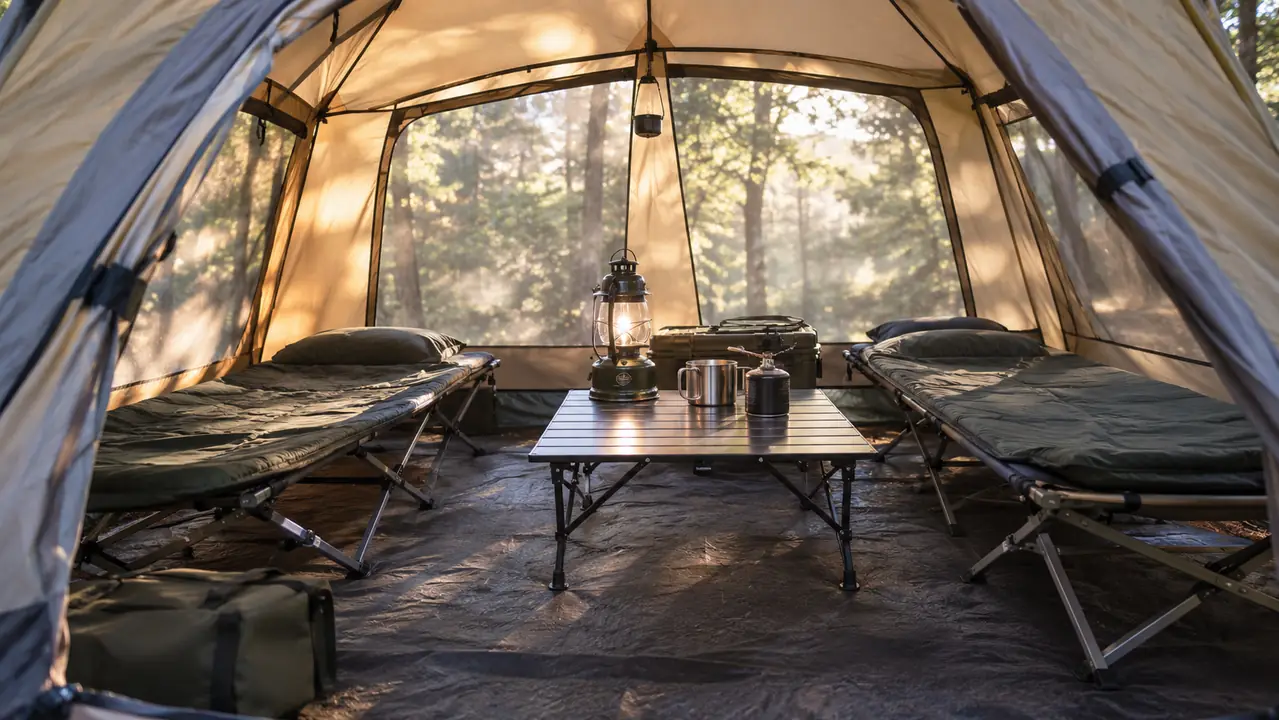
The floor plan is the best part. The walls are nearly vertical, so the usable space is close to the full footprint. I can stand up in the center and most of the edges, which is rare for a tent in this price range. The center height is enough for Wade, who is six feet, to move around without crouching. We fit two cots, a camp table, a lantern, and still had room for Eli to play cards on the floor during a rainy afternoon.
The two doors help a lot. One on each side means nobody climbs over anybody else to get out at night. The mesh panels pull back on both doors, and the windows have covers that roll down from inside. On warm nights we leave everything open and get a decent cross breeze. On cooler nights we close the mesh and keep the rain fly on, and it stays comfortable.
The CORE brand has been consistent for me. The zippers on the doors and windows have not snagged or separated after fifteen nights of use. The seams on the floor and the fly have not leaked, including during the Garner storm that soaked our old tent. The poles are fiberglass, and after a season of hard use they still lock into place cleanly. I have had cheaper tents where the poles started to splinter by the end of the first summer. This one has not.
How It Handles Texas Weather
Texas summer heat is the real test. This tent has a lot of mesh, which helps, but it is still a big polyester box in the sun. By mid-afternoon, the inside is warm. I set up in the shade when I can, and I use a reflective tarp over the top on the hottest weekends. With the doors and windows open, the breeze moves through well enough that we do not feel like we are baking.
Wind is the bigger issue. The tent is tall and boxy, which means it catches air like a sail. On the night the neighbor's canopy snapped, our tent held because I had used every stake loop and added two extra lines. Without those, I think it would have been a rough night. The frame is sturdy, but the fabric panels flap in strong gusts, and you will hear it all night.
What Nobody Tells You About the 9 Person Size
First, the 9-person rating is generous. You could sleep nine people on the floor if they were all lying like sardines, but you would not want to. With cots and gear, three or four people is comfortable and five is tight. The honest way to read the number is as floor space, not sleeping capacity. For our family of three, it is perfect. For a family of six expecting beds for everyone, it will feel crowded.
Second, the tent is heavy and bulky. It lives in the back of our 2017 4Runner all summer because it does not fit neatly in a duffel with the rest of the gear. The folded bundle is long and awkward, and the bag has no shoulder strap. Carrying it from the truck to the site is a two-hand job. That is fine for car camping and a real problem if you ever think about taking it somewhere you have to walk.
Third, condensation is a thing. The walls are mostly mesh with a polyester rain fly, and on cool humid nights, moisture builds up on the inside of the fly. I have woken up to a light drip near the edges more than once. The fix is simple: leave a window cracked and do not camp in a low spot. But nobody tells you this in the product photos, and it surprised me the first time.
The Rain Fly Question
The rain fly is the weakest part of the design. It covers the top and part of the upper walls, but it does not reach all the way down. In a steady sideways rain, the lower walls can get wet. The fabric is water-resistant but not fully waterproof, so I have learned to keep gear off the walls and to set up with the doors angled away from the prevailing wind. It has never leaked for me, but I can see how it would in a heavy all-day rain.
I have also learned to bring a footprint or a cheap tarp to go under the tent. The floor is coated and has held up so far, but the ground in Texas state parks is often rocky and covered in little sticks. A tarp adds almost no weight and protects the floor from punctures. It also gives you a dry place to stand when you take your shoes off at the door.
The Things That Bug Me
The stakes that come with it are thin. I replaced them with heavier ones after the first trip because the originals bent on the rocky ground at Garner. That is a cheap fix, but it is an extra step most people do not expect. The guy lines are also on the short side, and the reflective tabs are small. In a strong wind, you want longer lines and bigger stakes, and you want to use every loop.
The bag zipper is my biggest annoyance. It is a standard coil zipper with a small pull, and it snags on the fabric every few uses. I have not replaced it yet because the tent itself is still in good shape, but I have started packing a small repair kit. If I were reviewing this tent after one trip, I might not mention it. After fifteen trips, it is the detail I notice every time I pack up.
The door zippers are better than the bag zipper, but they still need a little care. If you yank them fast, the fabric can catch in the track. I have learned to pull them slowly and to make sure the mesh is tucked out of the way before closing. It is not a dealbreaker, just a habit you develop after the third or fourth time you free a stuck zipper.
What I Changed or Added
After the first trip, I made three small changes. I swapped the stakes for heavier ones, added longer guy lines, and bought a simple footprint tarp. All three are cheap and take about ten minutes. The tent works fine without them, but with them it feels much more solid in wind and on rocky ground.
I also added a small hook-and-loop strap to hold the door open when the wind is light. The factory ties work, but they are placed high and the door flaps in a breeze. A cheap strap near the bottom keeps it out of the way. Little fixes like this are why the tent has stayed in our rotation for two seasons.
How It Compares to My Old Tent
Before the CORE, we had a dome tent from a big-box store that took two people twenty-five minutes to pitch and leaked at the seams in a Garner storm. That tent was smaller, cheaper, and easier to pack, but it failed at the one thing that matters most: keeping us dry and comfortable. The CORE has never leaked, sets up in a fraction of the time, and gives us enough room to actually enjoy a rainy day inside.
The tradeoff is that the CORE takes up more space in the truck and needs more care when you pack it. My old tent folded into a round bag that fit behind the seat. The CORE is longer, heavier, and needs the whole back cargo area if I want to keep it dry and clean. For weekend trips where the truck is full of coolers and chairs, that is a real consideration.
The Bottom Line After Two Seasons
After about fifteen nights in two seasons, I still reach for the CORE Instant Cabin Tent every time we car camp. It is not perfect. The rain fly could be longer, the stakes could be sturdier, and the bag zipper is annoying. But the things it does well, it does better than anything else I have owned: setup speed, headroom, and honest floor space for a family of three.
If I had to buy again today, I would make the same choice. I might look for a version with a better rain fly or a wheeled bag, but I would still want this same floor plan and this same two-minute setup. For the way we camp, that combination is worth every bit of the extra bulk.
What I Liked
- Sets up in about two to three minutes with the pre-attached poles
- Vertical walls and tall center height make it feel much bigger than it is
- Two doors and lots of mesh give good airflow in Texas heat
- Survived two seasons of regular car camping, including a storm that flooded our old tent
- Room for cots, a camp table, and gear without tripping over each other
Where It Falls Short
- 9-person rating is really a 3 to 4 person tent with gear
- Bulky and heavy; the folded bundle is awkward to carry
- Rain fly does not cover the lower walls in sideways rain
- Included stakes are thin and bend on rocky ground
- Bag zipper snags and the bag has no shoulder strap
What surprised me most is not how fast it sets up. It is how much room the vertical walls give you once you are inside.
Who This Is For
This tent is for weekend car campers who want to spend their Friday evening at the fire instead of fighting with poles. It is for families who bring cots, coolers, and a few too many clothes, and who would rather have one big room than two small ones. It is for people who camp in state parks where you drive right up to the site, because that is exactly where this tent shines. If that sounds like your kind of camping, the CORE Instant Cabin Tent will make you happy.
Who Should Skip It
Skip it if you backpack, if you camp in places with hard wind and sideways rain, or if you need a tent that packs small enough to fit in a car with all your other gear. Skip it if you actually need to sleep six or more people in comfort, because the floor space does not work that way. And skip it if you hate fussing with a rain fly and stakes, because the included hardware is the cheapest part of the package. For those jobs, a smaller dome or a more rugged cabin tent is a better fit.
My honest bottom line after two seasons
The CORE 9 Person Instant Cabin Tent is the right tent for a specific job: fast, roomy car camping for a small family. It has real flaws, but none of them have made me want to switch. Check today's price on Amazon if you think it fits your campsite.
Amazon Check Today's Price on Amazon →