
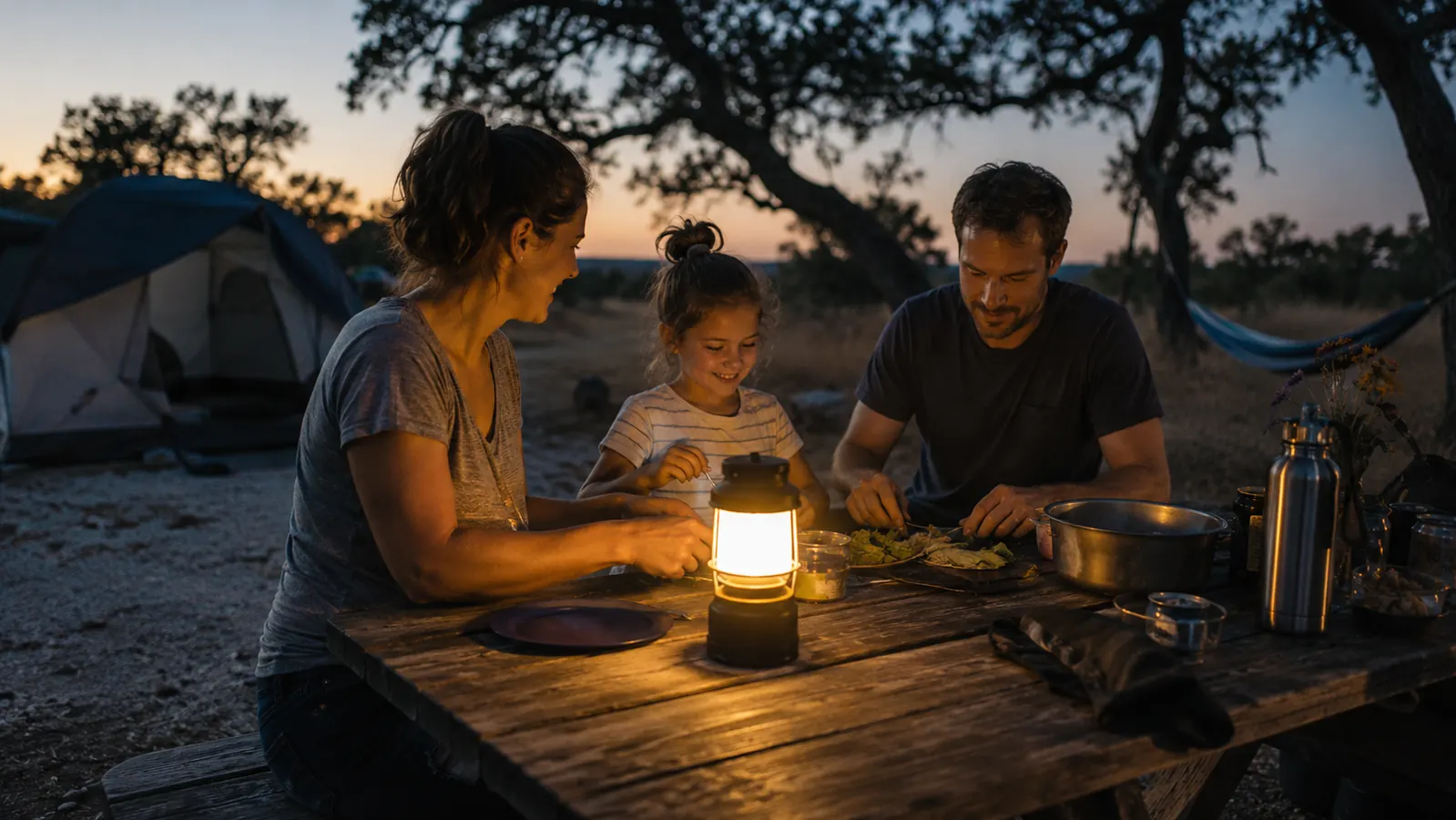
Camp always looks better in the daylight. By the time we've found the tent site, hauled the cooler out of the 4Runner, and remembered which bag has the stakes, the sun is usually gone. That first hour of darkness is when a campsite falls apart. The light is a flashlight in one hand and a phone in the other, the stove is a dark shape, and somebody is always standing in the one spot that's lit. For a kid, that first dark night is the difference between loving the trip and wanting to go home.
We ran our site for years on a pair of battery lanterns that ate D cells like candy. By the second night they went dim. By the third they were done, and we were back to cooking by headlamp. Last summer I replaced them with two Lepro rechargeable lanterns, and it changed the whole rhythm of setting up camp. This is the five-step routine I use now, from the first stake to the last trip to the bathhouse. The change was immediate enough that I bought a second one before the next trip.
The lantern that ended our D-cell habit
Two Lepro 1000LM rechargeable lanterns cover our whole campsite for a three-night stay on a single charge. Four light modes, a 4400mAh battery, and nothing to pack but a USB cable.
Amazon Check Today's Price on Amazon →How I Light Our Site
The short version is that one lantern lives on the table and one lives near the tent, and they trade jobs depending on the night. The table lantern handles dinner, cards, and whatever Eli is reading. The tent lantern marks our spot and gets us through the 2 a.m. bathroom runs. On the rare night we need a third light, the headlamp covers it. It sounds simple, but simple is what you want at the end of a long day of driving.
I did not arrive at this setup on purpose. I arrived at it by camping badly for a lot of years, then paying attention to which light I actually reached for. The lantern on the table got used every single night. The lantern hung from a tree branch looked nice and helped almost nobody. So the system is built around the jobs, not the looks. The looks matter more once the kids are asleep.
Step 1: Pick Your Light Source Before You Pick Your Spot
The mistake I made for years was treating light as an afterthought. We'd get the tent up, get the chairs out, and then realize we couldn't see the stove. By then the good spots for a lantern, the ones that throw light across the table instead of into the trees, were already taken by a cooler or a camp chair. The old lanterns made this worse, because they were dim enough that I didn't want to move them once they were set.
Now I decide where the lanterns live before we finish unpacking. Our site has three zones: the table where we eat and cook, the tent where we sleep, and the path to the bathhouse. Each zone gets a job, and the lanterns get placed for those jobs, not just set down in the middle of everything. It takes about two minutes and it saves an hour of shuffling things around after dark.
This is also where a rechargeable lantern earns its keep. The Lepro has four light modes, from a bright setting that can light the whole table to a low glow that won't wake the tent. Because it runs on a 4400mAh battery instead of disposable cells, I don't ration the light. I use the bright mode when I need it and drop it down when I don't, and I never stop to wonder how many D cells are left.
Step 2: Set Up a Table Lamp, Not a Ceiling Light
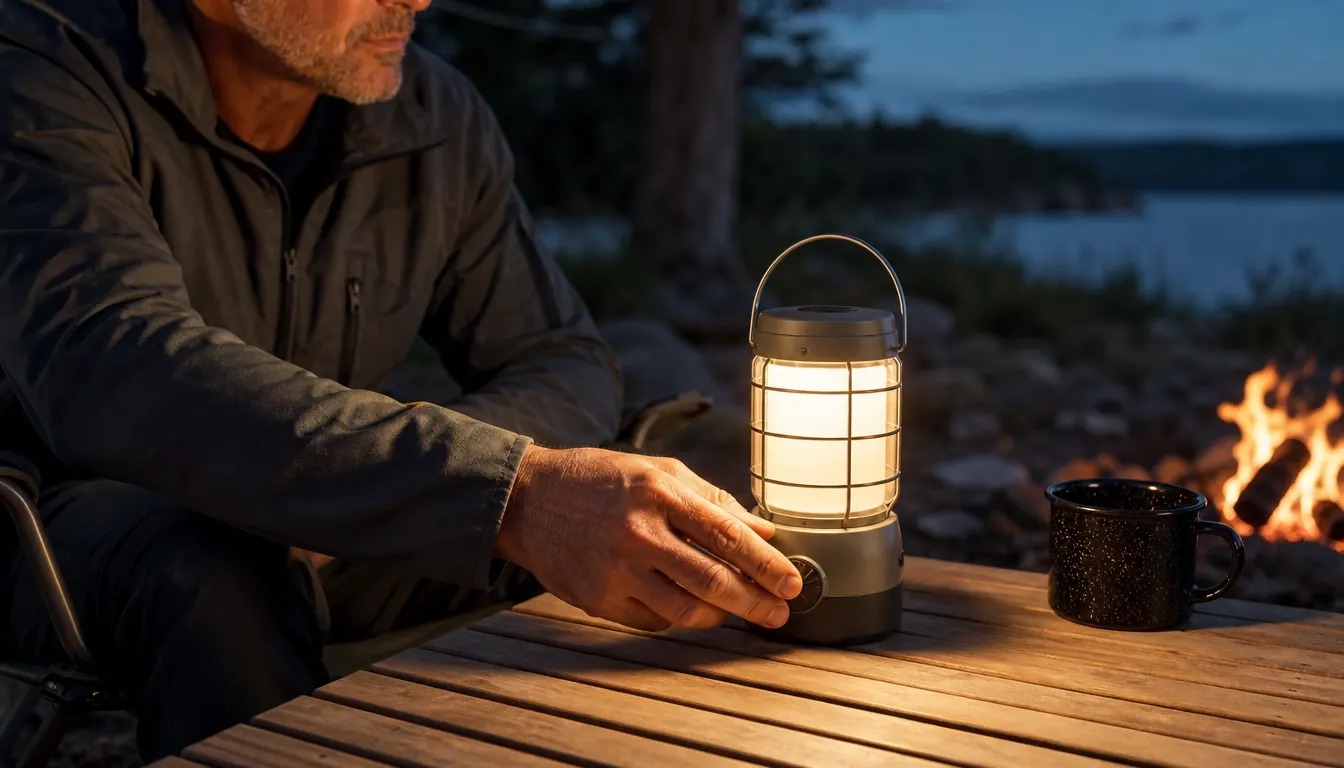
The biggest mistake I see at other campsites is hanging the lantern high, like a ceiling light. All that does is create one bright pool in the middle and shadows everywhere else. Your plates are in the dark, your coffee cup is in the dark, and everyone is leaning into the one spot that's lit. The fix is not a brighter lantern. The fix is a lower one.
I set our main lantern on the picnic table, off to one side, at about the height of a dinner plate. That turns it into a table lamp instead of a ceiling light. The light spreads across the food, the cards, and the kid's homework, and it stays out of everyone's eyes. On medium mode it's plenty for dinner. On low mode it's perfect for a board game after the dishes are done. The lantern sits on the table from dinner until we turn in, and it never moves.
The height is the part people get wrong. A lantern at chest height lights faces and food. A lantern at head height lights the tops of heads and the treeline. If you want to hang a lantern, hang it low, just above table height, and off to the side of where people are sitting. The goal is even light across the work surface, not a lantern in the middle of the conversation.
Step 3: Make a Path to the Bathhouse
The most underrated light at any campsite is the one that gets you to the bathroom at 2 a.m. Nobody plans for it, and then somebody stumbles over a root or kicks the cooler on the way back. A lantern on low, set at the edge of the site and pointed toward the path, fixes that. It is the least glamorous job on the whole trip and the one you will be most grateful for.
We use the second Lepro for this. I set it on the ground near the tent door, on its lowest mode, angled so it lights the route without shining into the tent. It's enough to see the rocks and the guy lines, and it's dim enough that it doesn't wreck your night vision or wake anybody up. When Eli gets up before sunrise to fish, he grabs that lantern on the way out. It has become the lantern Eli is in charge of, which means I check it before bed.
The same trick works for finding your site on the way back. From the bathhouse, our tent is a soft glow instead of a dark shape. On a moonless night at Pedernales, that glow is the difference between walking straight to your tent and wandering into someone else's camp. If you've ever apologized to a stranger at midnight for shining a phone in their face, you know why this matters. It is the kind of light you don't think about until it's missing, and then you notice it every night.
Step 4: Light the Tent From the Inside Out
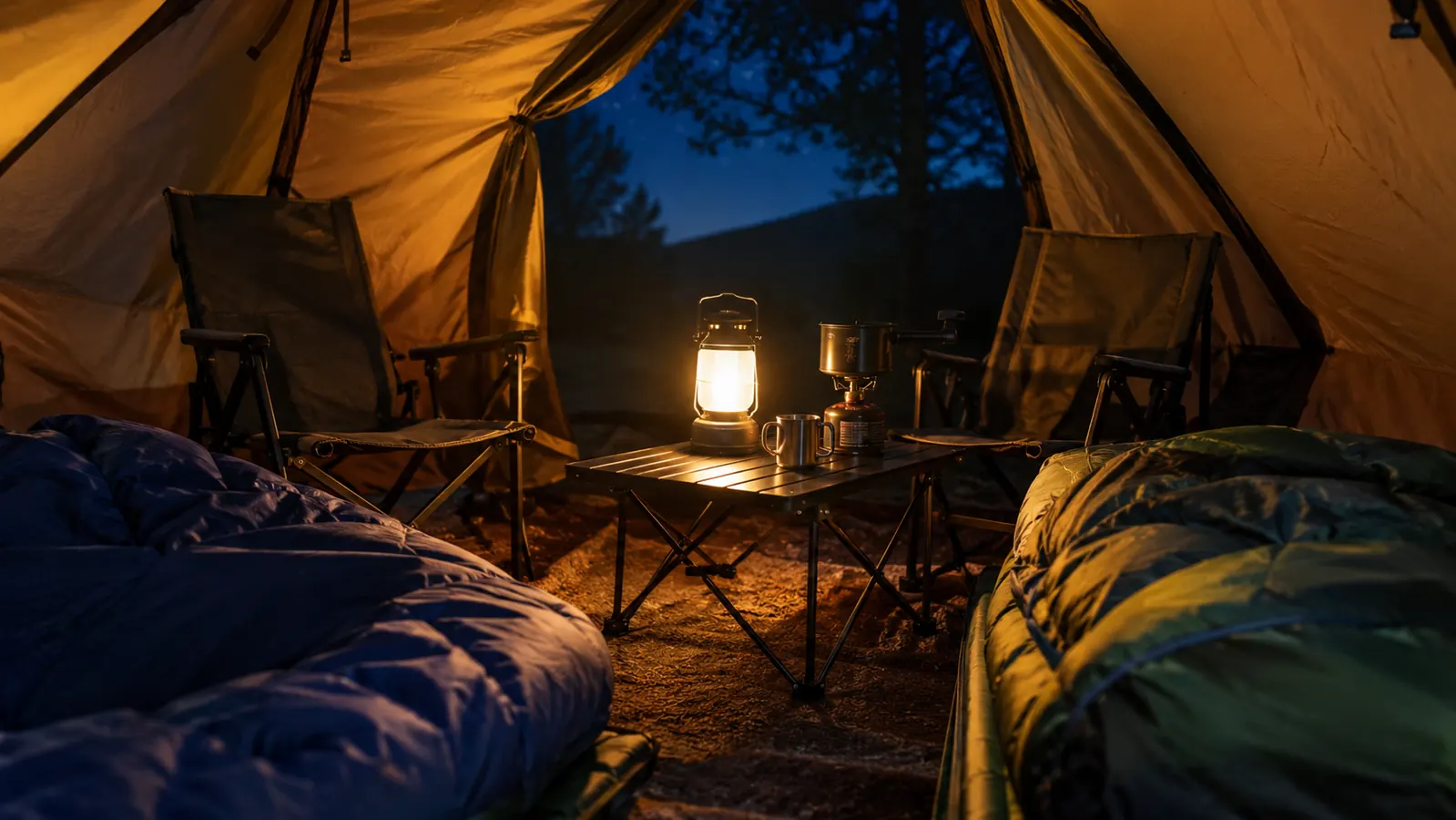
A lantern inside the tent does double duty. It gives you light to change clothes and read, and it turns the whole tent into a beacon you can see from across the campground. We set ours on low, near the door, so Eli can read without the light shining right in his eyes. He reads for about twenty minutes, the lantern drops to the lowest setting, and that's the night. That twenty minutes of quiet reading is my favorite part of the whole trip.
This is where LED matters. The Lepro puts out a thousand lumens on its brightest setting, but it stays cool to the touch, so I don't worry about it near sleeping bags or pillows. There's no flame, no fuel, and no reason to take it outside before you turn it on. I still zip the door first, because a lit tent is a bug magnet, but that's a Texas thing. A thousand lumens is overkill inside a tent, which is why ours lives on low in there.
One habit that saves us every trip: the lantern goes in the tent with us at night instead of staying on the table. It stays warmer, the battery holds better on cold nights, and it's right there when somebody needs the bathroom at 3 a.m. In the morning it comes out with the sleeping bags and goes back on the table before breakfast. It also means nobody steps on a shoe hunting for a flashlight.
Step 5: Charge by Day, Not by Night
The one thing that trips up people new to rechargeable gear is the charging routine. You don't want to be hunting for a USB cable at 10 p.m. with a dead lantern. I charge both lanterns on the kitchen counter the day before we leave, and I top them off on the last morning if we're staying a third night. That ten minutes at home saves a whole evening of frustration. I learned that the hard way on a rainy trip to Garner.
The 4400mAh battery has carried us through a full three-night trip on medium and low without touching a charger. On the yearly Colorado trip, where the nights are long and cold, I keep one power bank in the camp box as a backup. I've needed it once, and it was worth the weight. Cold drains every battery faster, and a lantern that lives in the tent at night stays warmer and holds its charge better. If you camp in cold weather, keep that in mind.
The other half of the routine is knowing when to charge. I top off the lanterns during the day, when the sun is up and the car is running, instead of waiting until dinner. That way the lanterns are full when the sun goes down, and the evening never starts with a dead battery. It sounds obvious, but I have watched otherwise organized campers run a generator at 9 p.m. just to charge a phone. Do your charging when the sun is up and the whole evening goes smoother.
What Else Helps
A good lantern is the backbone, but a few cheap additions round out the setup. I keep a headlamp in the camp box for hands-free work like filling the stove or finding something in the car. A short string of lights along the canopy adds a little ambiance, though I don't count on them for task light. And I always carry one USB power bank, because rechargeable gear is only as good as your ability to top it off. None of it costs much, and all of it gets used.
If you're still deciding between a rechargeable lantern and a battery one, the short version is that I stopped buying D cells entirely after one season with the Lepro. I also put it side by side with a Goal Zero lantern on a weekend trip, and the Lepro held its own on runtime and spread. The full comparison and the long-term review are both on this site if you want the details before you buy.
One honest note: the Lepro is not the brightest lantern I own, and its lowest mode is not as dim as some fancy backpacking lights. For family car camping, that's the right trade. I want enough light to cook and read by, and a low mode that won't blind anyone at midnight. The Lepro hits both, and it has taken a beating bouncing around the back of the 4Runner for a year.
Two Lepro lanterns cover a 20-foot campsite for three nights on a single charge. I stopped packing D cells entirely.
One lantern, four modes, zero batteries to pack
The Lepro 1000LM has lit our table, our tent, and our bathhouse path for a year of trips. If you're still hauling battery lanterns, this is the swap that makes the whole campsite easier.
Amazon Check Today's Price on Amazon →