

I will start with the part nobody puts in the product photos: after a year of owning two Lepro 1000LM rechargeable lanterns, I still reach for them on every single trip, and I would buy them again. But there are also four or five small things that annoyed me enough that I want to tell you about them before you spend your money. This is the honest version, the one I would give a friend at the campsite, not the one on the box. I am not here to talk you out of a good lantern. I am here to make sure you know what you are actually getting, because the details that matter show up on night two of a trip, not in the listing photos.
We camp out of a 2017 Toyota 4Runner, usually at Garner, Pedernales Falls, or along the Guadalupe River, plus one yearly trip to the Colorado mountains. That means our gear sees Texas summer heat, sudden Hill Country storms, and cold mountain nights. I bought two Lepro lanterns in summer 2025 to replace the old battery lanterns that ate D cells, and I have been testing them ever since. This review is based on about fifteen nights in the field, plus a handful of power outages at home, plus one very wet evening in Colorado when the rain moved in faster than the forecast said it would. Here is what actually happened.
The Quick Verdict
A dependable, bright, rechargeable lantern that earns its place in the car camping kit. It is not perfect: the battery meter lies a little, the hook is fussy, and the lowest mode is still bright. But for the price and the runtime, I would buy it again.
Amazon Check Today's Price →The lantern I keep reaching for on every trip
After a year of testing, the Lepro 1000LM is the one that stays on the picnic table from first light to last. Check today's price on Amazon.
Amazon Check Today's Price on Amazon →How I Have Used It
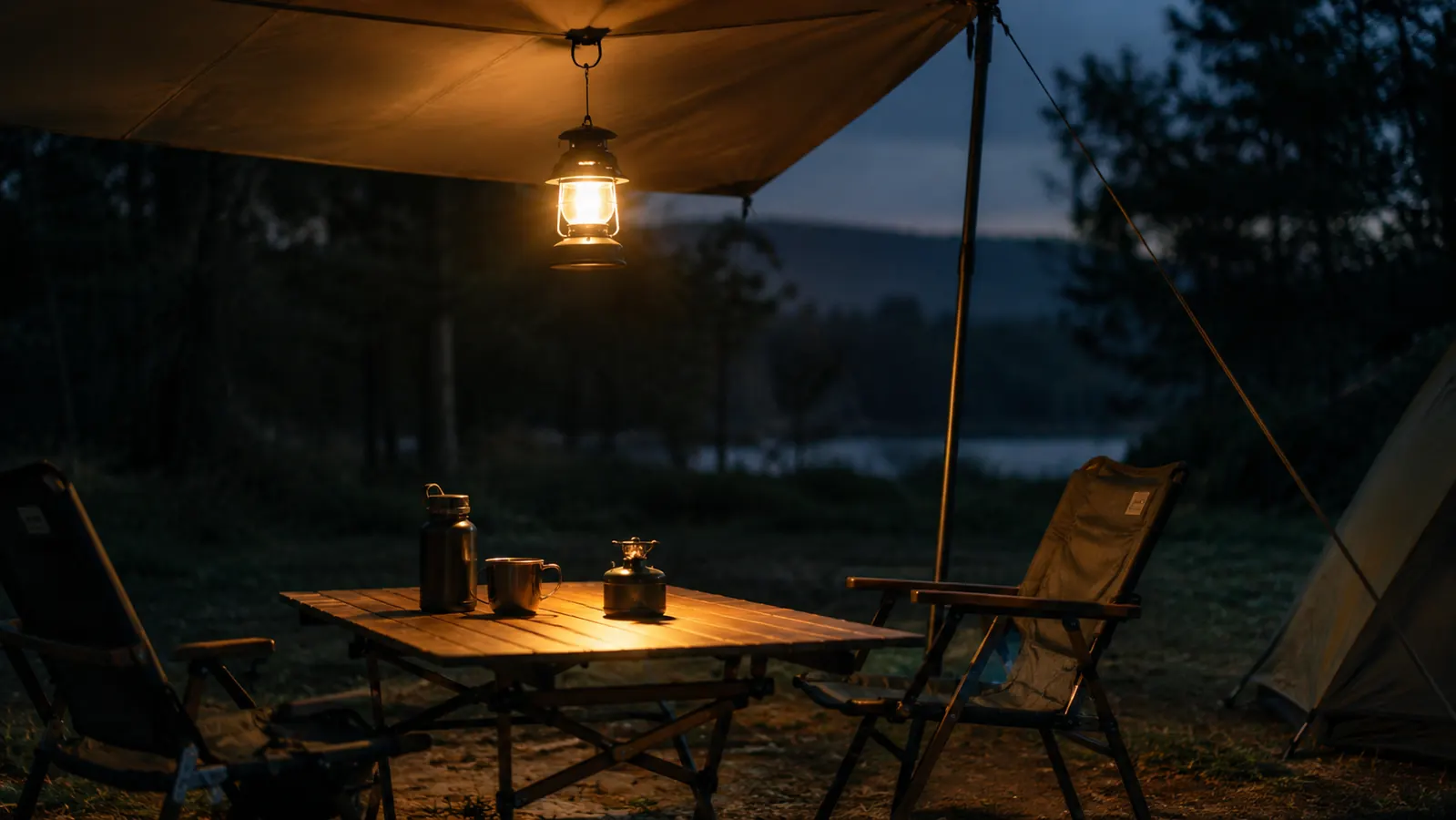
For the last year, these two lanterns have been our primary campsite light. One lives on the picnic table, the other hangs from the awning of our CORE 9 Person Instant Cabin Tent to light the cooking area. On the Colorado trip, both hung inside the tent on cold nights, and one sat on the tailgate of the 4Runner while we cooked breakfast on the Coleman Triton 2-Burner Propane Stove. That setup is the whole point of a car camping lantern: it needs to light a table, a stove, and a tent without needing its own dedicated spot in the packing list.
I have also used them for less glamorous jobs: lighting the inside of the 4Runner while I changed a tire at dusk, sitting on the bathroom counter during a power outage at home, and once hanging from a tree branch while I patched a tent seam in the rain. That last one is where the lantern surprised me, because it got genuinely wet and kept working. The rain was coming down hard enough that water was running down the branch and over the top of the lantern, and it never flickered. I dried it off the next morning and it charged and ran like nothing had happened.
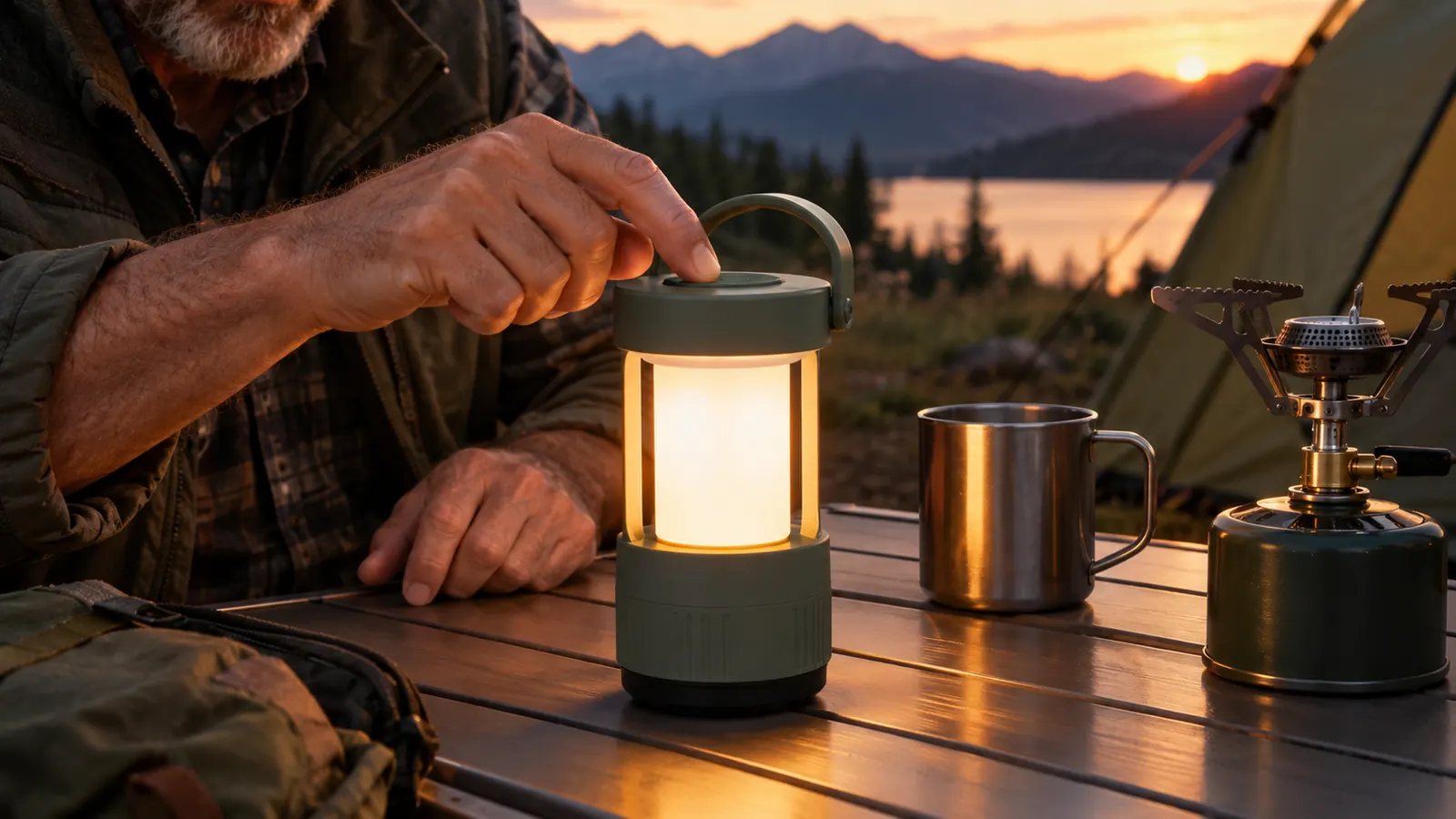
The 4400mAh battery is the headline feature, and in my testing it mostly delivers. On the lowest mode, I have gotten well over 24 hours of light. On the highest mode, I get roughly six to eight hours, which matches the claimed runtime closely enough for me. The 1000 lumen claim is also believable: at full brightness this thing lights up the whole picnic area, not just the table. I tested the runtime once on purpose, leaving one lantern on high from dinner until it died, and it made it through the whole evening and most of the next morning. That is the kind of number I trust more than the spec sheet.
What Nobody Tells You About the Battery Meter
Here is the first honest note. The battery indicator has four blue lights, and they are not a fuel gauge. They are a suggestion. I have watched the lantern show two lights, then die without warning twenty minutes later. I have also watched it show one light and run for another four hours on low. The meter is fine for a rough idea, but do not plan your evening around it. On the last night of our spring trip to Pedernales Falls, the lantern showed three lights at dinner and was dead before the dishes were done. The next night, the same lantern showed one light and stayed bright until breakfast.
The bigger issue is that there is no way to know the battery level while the lantern is off. You have to turn it on, look at the lights, and turn it off again. That is a small thing, but it matters when you are packing for a trip and trying to decide which lanterns to charge. I have learned to just charge both before every trip, every time, without checking. It takes about four hours to top one up from empty, so I plug them in the night before we leave and unplug them in the morning. That routine has never left us in the dark, which is more than I can say for the old D cell lanterns.
The charging port is also worth knowing about before you buy. It is a micro USB port on the bottom of the lantern, under a small rubber flap. The flap stays closed well enough, but the port is not the USB-C that most of my other gear uses. That means I carry one extra cable just for the lanterns. It is a minor annoyance, not a dealbreaker, but I would have liked to know it before I packed. The cable is short, too, so the lantern has to sit close to the outlet while it charges. At home that means the kitchen counter. In the 4Runner it means the lantern rides on the floorboard while the cable reaches the USB port in the dash.
The battery meter is a suggestion, not a fuel gauge. I have watched it show two lights and die twenty minutes later, and show one light and run four more hours.
The Light Modes, Tested Honestly
The Lepro 1000LM has four light modes: high, medium, low, and a red mode. The high mode is genuinely bright, bright enough to light a full campsite. The medium mode is what I use most, bright enough for cooking and reading without washing everything out. The low mode is where my honest complaint lives. I will get to that in a second, because it is the thing most reviews skip.
Low mode is still bright. It is not a dim nightlight. When I want to move around the tent at 2 AM without waking Eli, the low mode still lights the whole tent. I have learned to point it at the wall or cover it with a shirt to get the soft glow I actually want. That is a workaround, not a feature, and I wish the lowest setting were truly dim. Eli is fourteen now and sleeps through most things, but the light still reaches his cot, and it is enough to pull him out of a deep sleep on the first night of a trip. A lantern with a real nightlight mode would be my first choice next time.
The red mode is simple and useful. It preserves night vision and does not attract bugs the way white light does. On the Colorado trip, we used red mode as a gentle tent light after Eli went to bed, and it worked well. I just wish the red mode were dimmer too, because even the red mode is fairly bright at close range. One night I hung it from the tent peak and the red glow was still strong enough to read by, which is not what I want at midnight. I ended up draping a bandana over the top to soften it.
What Held Up and What Did Not
The build quality is better than I expected for the price. The body is a soft-touch plastic that feels good in the hand and has survived a year of being tossed into the back of the 4Runner. The hook on top folds flat when not in use, which is nice for packing. The lantern has also survived being knocked off the picnic table twice, once onto solid limestone, with nothing more than a scuff. The second fall was at Garner, and it landed on the corner of the base. I braced for a cracked housing and instead found a small scuff mark and a lantern that turned right back on.
The one thing that has not held up perfectly is the rubber flap over the charging port. After a year of use, the flap still closes, but it does not sit as flush as it did new. I have not had water get in, but I am more careful about rain now. I would not call it a weak point, exactly, but I would not call it confidence-inspiring either. When the lantern is hanging under the awning in a storm, I angle the charging port toward the tent instead of letting it face the rain. That is a small habit, but it is the kind of thing you only learn after a season of use.
The hook is my other honest complaint. It is a folding hook that works fine for hanging the lantern from a tent pole or a tree branch, but it is fussy. The hook does not lock into place, so the lantern can swing and rotate while hanging. On a breezy night, that means the light slowly turns away from where you want it. I have learned to hang it by the handle instead, which is more stable. At Pedernales Falls last spring, a steady breeze had the lantern doing a slow spin on its hook, and I had to get up twice to turn it back toward the table. After that trip I stopped using the hook for anything that needed steady light.
What I Liked
- Genuinely bright on high, enough to light the whole picnic table area
- Long runtime on low, easily more than a full day of light
- Rechargeable battery means no more D cells in the camp bin
- Survived a year of car camping, a wet evening in Colorado, and two falls off the table
Where It Falls Short
- Battery meter is a suggestion, not a gauge; two lights can mean twenty minutes of life
- Low mode is still too bright for a true nightlight
- Micro USB charging port, not USB-C, and the included cable is short
- Folding hook does not lock, so the lantern swings and rotates in a breeze
Who This Is For
This lantern is for the weekend car camper who wants one dependable light source that does not depend on a pile of D cells. It is for the family that camps a few times a season, sets up fast, and wants the picnic table lit without thinking about it. It is for anyone who has been through the old routine of battery lanterns that go dim halfway through the second night. We lived that routine for years, and the switch to rechargeable changed how we pack. I no longer carry a sleeve of spare batteries in the food bin, and I do not worry about whether the lanterns were left on by accident.
It is also for the home power outage kit. I keep one Lepro charged and ready at home, and it has been the light we reach for more than once when the Hill Country wind knocks the power out. A rechargeable lantern that you can top off from a USB port is a genuinely useful thing to have around, even if you only camp twice a year. During the big outage last spring, that one lantern lit the kitchen for the whole evening, and I charged it from the 4Runner the next day. It did more work in one night than the old battery lantern ever did.
Who Should Skip It
Skip it if you want a true dim nightlight mode, because the lowest setting is still bright. Skip it if you refuse to carry a micro USB cable, because that is the only way to charge it. And skip it if you want a lantern that hangs perfectly still from a hook, because the folding hook is fussy and the lantern will swing in a breeze. None of those are dealbreakers for me, but they are real limitations, and I would rather you hear them from me than discover them on the first night of your trip.
I would also think twice if you are a dedicated backpacker. At its size and weight, this lantern is better suited to the car camping kit than the backpack. For the ultralight crowd, there are smaller and lighter options that make more sense. For the rest of us, the ones who camp out of the back of a 4Runner, this lantern is a solid pick. I have done a few short backpacking trips, and I would not carry this lantern on any of them. It earns its keep on the picnic table and the tent awning, not on a trail.
The Honest Bottom Line
After a year of use, I would buy the Lepro 1000LM again. The brightness is real, the runtime is real, and the battery has held up through Texas heat and Colorado cold. The battery meter is a guess, the low mode is not dim enough, and the hook is fussy. Those are the things nobody tells you, and they are all things I can live with. I keep waiting for the lantern to fail me, the way the old battery lanterns did, and it has not happened yet. That is the highest compliment I can give any piece of camping gear.
The old battery lanterns that ate D cells are gone from our gear bin. In their place are two Lepro lanterns that have never let us down on a trip, even the ones where the weather did not cooperate. That is the test that matters, and the Lepro passes it. If you are looking for a lantern for the car camping kit, this is the one I would tell a friend to start with. Just charge it before you leave, bring the micro USB cable, and do not expect the lowest mode to be a nightlight. Know those three things and you will not be disappointed.
The honest verdict after a year of use
The Lepro 1000LM is the lantern I trust on every trip. Check today's price on Amazon and see if it earns a spot in your camp kit.
Amazon Check Today's Price on Amazon →