
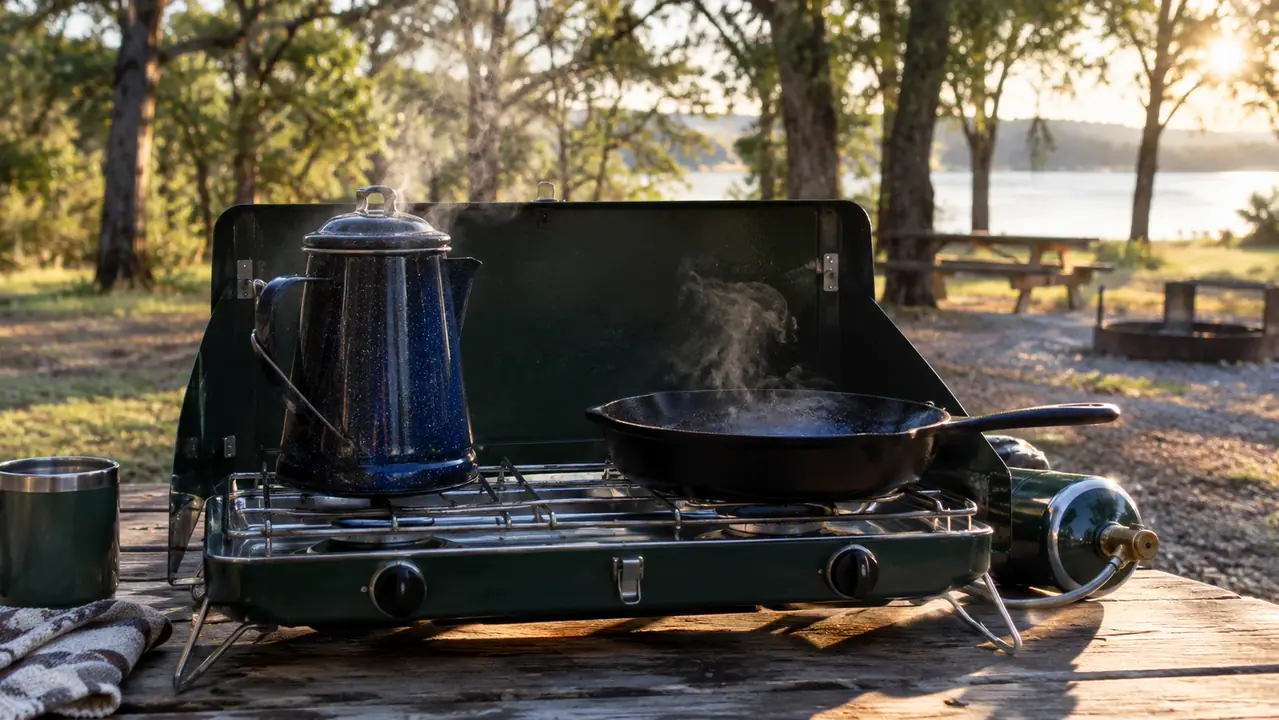
The worst part of a camping trip is the first morning. You wake up hungry. The coffee is weak. And the eggs are cooking in shifts because you only have one burner. That was me for years. I cooked camp breakfasts on a single-burner backpacking canister stove, which meant bacon first, then eggs, then reheating the bacon while the coffee percolated. By the time everything made it to the table, the first pancake was cold and somebody was standing over the stove eating straight from the pan. In spring 2025 I replaced that stove with the Coleman Triton 2-Burner Propane Stove, and breakfast went from a 45-minute juggling act to a 25-minute routine. This is exactly how I cook a full camp breakfast for three on it, start to finish, including the mistakes I made along the way.
The Triton is a two-burner propane stove with a combined output of 20,000 BTU, which is enough for a 10-inch skillet on one side and a percolator on the other. It folds up flat, runs on the green 16.4-ounce propane cylinders you can buy at any hardware store, and lights with a push of the igniter. None of that matters if you don't have a system, though. The stove just gives you two burners. You still have to decide what goes on which burner and in what order. Here is the system I have landed on after a season and a half of using it at Garner, Pedernales Falls, and Guadalupe River state parks, plus a week up in the Colorado mountains.
Two burners mean coffee and bacon at the same time.
The Coleman Triton is the stove I reach for on every trip now. It folds flat, lights fast, and gives you two real burners in about the same footprint as my old single burner. See today's price on Amazon.
Amazon Check Today's Price on Amazon →Step 1: Set Up the Stove the Night Before
Camp breakfast goes wrong in the dark, cold morning when you are trying to do too much at once. So I set up the stove the night before, right after dinner. I find a level spot on the picnic table or on the ground, set the stove on it, and attach the propane cylinder. The Triton has a regulator that screws onto the cylinder, and I tighten it until it stops, then give it one more small turn. No tools needed.
Then I check for leaks. I mix a little dish soap with water in a cup and brush it onto the connection where the cylinder meets the regulator. If it bubbles, I shut the valve, unscrew, and try again. It has never bubbled on me, but the check takes ten seconds and it is the kind of habit that keeps a trip from going sideways. I also make sure the stove is facing away from the prevailing wind. At Garner, the wind off the river can find its way into the burners, and a stove that faces into the wind takes twice as long to boil water.
Before I close the lid for the night, I set out the gear I will need in the morning: a 10-inch cast iron skillet, a small percolator, a spatula, a cutting board, and a plastic bin with the coffee, eggs, bacon, and pancake mix. In the morning I am not hunting for anything. I just light the stove and start. This one habit, doing the setup the night before, did more for my camp breakfasts than any piece of gear.
Step 2: Get the Coffee Going on One Burner
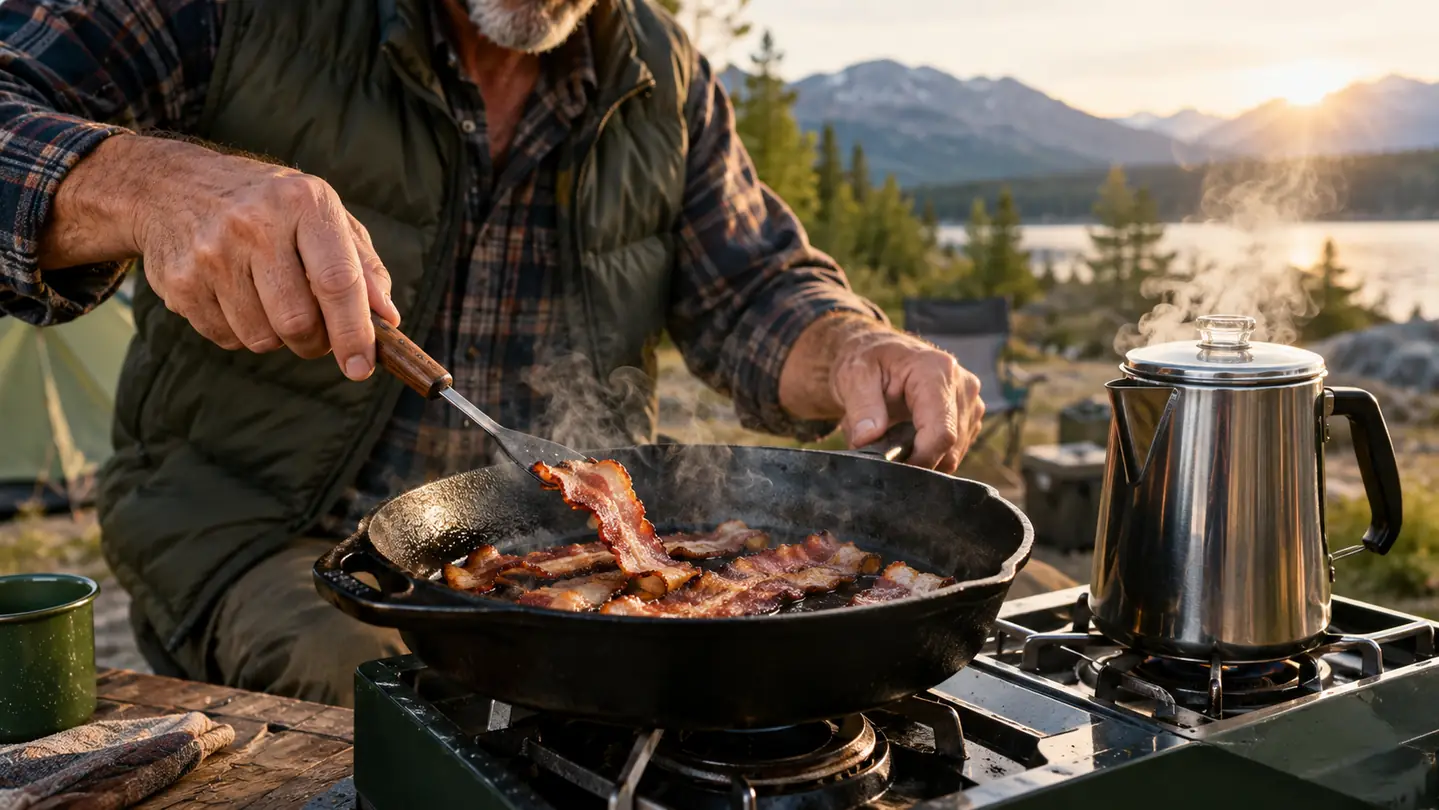
The first thing I light is the coffee. I fill the percolator with cold water, add the grounds to the basket, and set it on the left burner. I turn the knob to high, push the igniter, and when the burner lights I dial it back to medium. Percolators take about 10 minutes to do their thing, and that is time I use for the rest of breakfast. Coffee first matters because it is the one thing that cannot be rushed. Everything else can wait a few minutes. A hungry camper without coffee is a problem.
One thing I learned the hard way: don't walk away from a percolator. The first time I used one on a camp stove, I set it to high and went to grab the eggs, and the coffee boiled over and made a mess of the burner. Now I keep an eye on it, and when the little glass knob on top goes from clear to dark brown, I slide the pot to the back of the burner or turn the burner off. The coffee stays hot enough to serve, and the burner is free for something else.
If you are at higher elevation, like our week in Colorado, water boils at a lower temperature and coffee brews a little faster. I drop the heat a notch and watch the percolator more closely. In Texas summer heat, the opposite problem shows up: the water in the percolator starts cold from the cooler, so give it an extra minute or two. Either way, the two-burner stove lets the coffee keep working while the skillet heats up on the other side.
Step 3: Put the Skillet on the Second Burner
While the coffee works, I put the cast iron skillet on the right burner and let it preheat on medium. Cast iron takes a few minutes to come up to temperature, so I start it early and let it heat while I slice fruit or mix pancake batter. A cold skillet is the reason eggs stick. A hot one, with a little butter or bacon grease, releases them clean. This is the whole trick to camp eggs, and it only works if you have a burner to spare.
The Triton's two burners are both full size, so the skillet sits flat and heats evenly. On my old single burner, a 10-inch skillet hung over the edge and the heat was uneven, hot in the middle and cool at the rim. On this stove I get an even sizzle across the whole pan, which matters for pancakes more than anything. A pancake cooked on an uneven pan comes out dark in the middle and pale at the edges, and three people do not want to eat those.
If I am cooking for a bigger crowd, I swap the skillet for a griddle that covers both burners. The Triton handles it fine. The two burners put out enough heat to hold a full griddle at temperature, which means I can cook eight pancakes at once instead of two at a time. For our family of three, the skillet is enough. But it is nice to know the stove has headroom.
Step 4: Cook in the Right Order
The order is bacon first, then eggs, then pancakes. Bacon takes the longest and leaves behind the fat that makes the eggs and pancakes taste better. I lay four or five strips in the skillet, let them cook low and slow, and flip them once. When they are done, I move them to a paper-towel-lined plate and pour most of the grease into a small tin can, leaving a thin coating in the pan. That coating is what the eggs cook in.
Eggs go in next. Scrambled eggs take about four minutes on medium heat. I stir them constantly with the spatula, and I pull them off the heat just before they look done, because they keep cooking in the pan. If we are having pancakes, I wipe the skillet clean with a paper towel, add a little butter, and pour the first pancake. The key is that I am never waiting on the stove. The coffee is already done, the bacon is already done, and the only thing left is the eggs or pancakes.
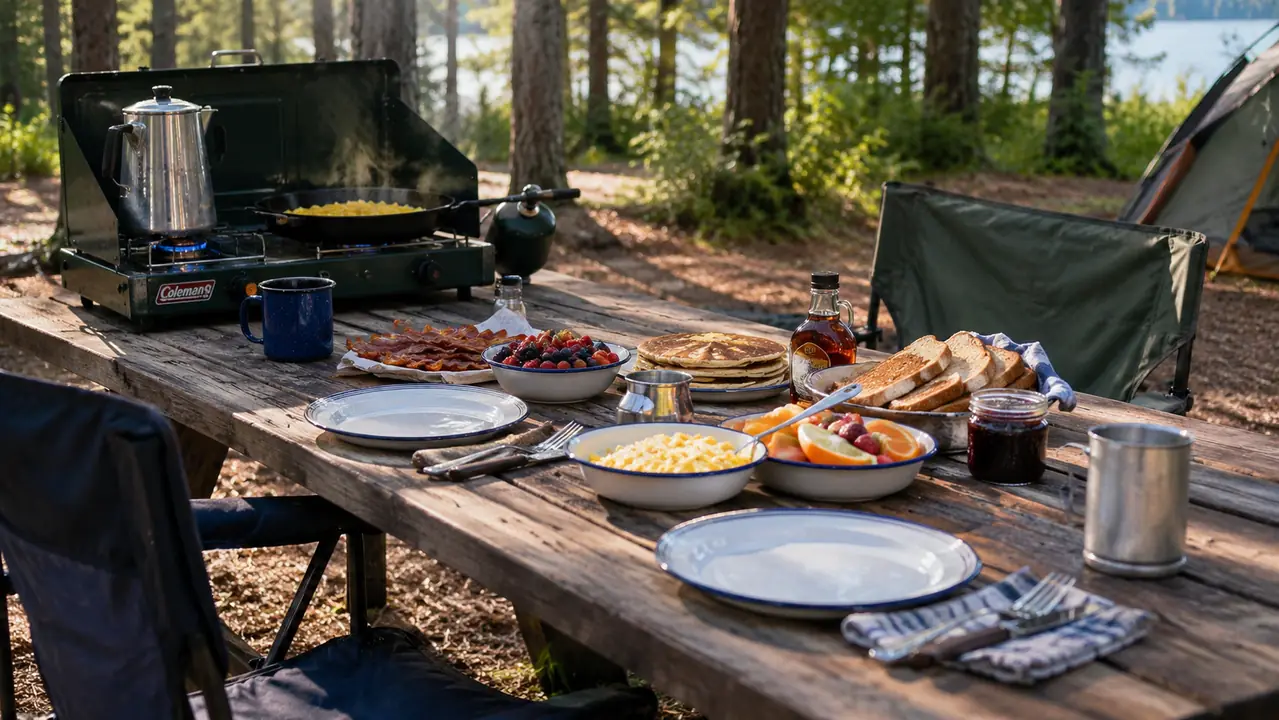
Here is the timing trick that makes it all land at once. Start the bacon at the same time you start the coffee. By the time the coffee is ready, the bacon is almost done. Slide the bacon off, cook the eggs, and everything hits the table warm. On a single burner you cannot do this. You are always cooking in sequence and eating in shifts, which means somebody is always eating cold food. Two burners fix that one problem and it is worth the price of the stove by itself.
Step 5: Clean Up Before You Relax
Breakfast is the messiest meal of the day, and the cleanup is ten times easier if you do it while the stove is still warm. I turn both burners off, let the skillet cool for a minute, then wipe it out with a paper towel. Cast iron does not need soap. It needs the grease wiped out and a thin coat left behind. If the pan has stuck-on bits, I add a splash of water while it is still warm and scrape with the spatula.
The stove itself needs almost nothing. I wipe the top with a damp paper towel once it is cool, make sure the burners are clear of crumbs, and let it dry before I fold it up. The propane cylinder can stay attached if I am camping another night. If we are heading home, I unscrew it, put the plastic cap back on, and store the cylinder outside the car, not in the cab. A propane cylinder in a hot car is a bad idea, and on a Texas afternoon that is not a risk I take.
One more thing: never fold the stove up hot. The lid and the latch are plastic on most two-burner stoves, and hot metal against plastic is how you end up with a warped lid. Give it ten minutes. Use that time to drink the last of the coffee and watch the kids play at the picnic table. The stove will be ready to pack by the time you are.
What Else Helps
A good breakfast on a two-burner stove is about more than the stove. I keep a percolator, a 10-inch cast iron skillet, a silicone spatula, and a small cutting board in a dedicated camp kitchen bin so nothing gets left home. A bright lantern makes a huge difference on a dark morning, and I use the Lepro rechargeable lantern I bought last summer, which beats the old battery lanterns that ate D cells. The YETI Tundra 45 cooler keeps the eggs and bacon cold overnight, which matters in Texas summer heat. And the Coleman camping chairs we bought a couple years back give everyone a place to sit with a plate instead of eating standing up. The stove does the cooking, but the system around it is what makes breakfast feel easy.
On a single burner you cook in sequence and eat in shifts. With two burners, the coffee and the bacon finish at the same time, and breakfast is on the table in 25 minutes.
That is the whole system. Set up the night before, coffee on one burner, skillet on the other, cook in the right order, and clean up while the stove is warm. It took me about 15 years of camping to stop making breakfast harder than it needed to be. The two-burner stove did not make me a better cook. It just meant I was no longer cooking for three people on one burner, and that changed everything about how a camp morning feels.
A full camp breakfast, without the juggling act.
The Coleman Triton is the stove that fixed breakfast for our family. It folds flat, lights fast, and has held up through a season and a half of Texas state park trips and a week in the Colorado mountains. See today's price on Amazon.
Amazon Check Today's Price on Amazon →